
If you are looking for products to remove facial hair permanently, the honest answer is that most at-home products cannot do it. Creams, razors, and dermaplaning tools only manage visible hair, while IPL may reduce growth over time for the right hair and skin type. For true permanent removal, electrolysis is the option to compare everything else against.
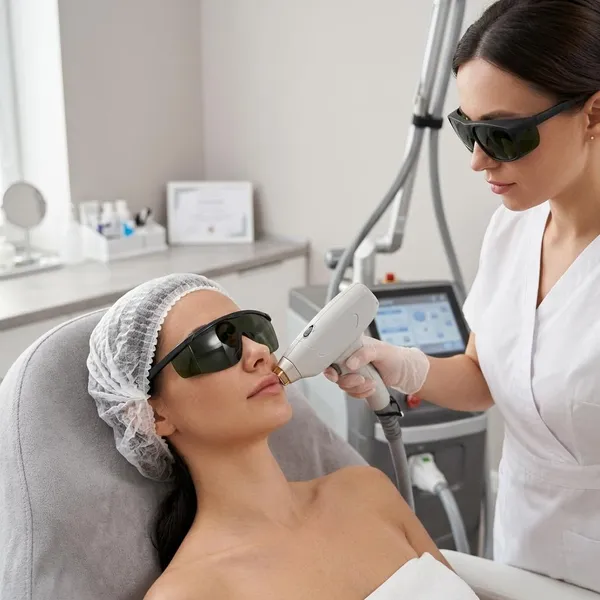
Professional options for longer-lasting facial hair removal
Start with professional treatment if your goal is more than a few smooth days. The key difference is that electrolysis and laser work at the follicle level, while most home products only remove the part of the hair you can see.
The first thing to check is your hair color and texture. Dark, coarse facial hair may respond well to laser. Light, gray, white, blond, or red hairs usually need electrolysis if you want a more permanent route. For a few stubborn chin hairs, electrolysis often makes more sense than buying several devices that may never target the hair properly.
Electrolysis for permanent removal
Electrolysis is the closest match for permanent facial hair removal because it treats individual follicles directly. A fine probe is used to deliver energy into the follicle, and when that follicle is successfully treated, it should no longer produce that same hair.
Laser for long-term facial hair reduction
Laser is better described as long-term reduction, not guaranteed permanent removal. It targets pigment in the hair, so it tends to work best when the hair is dark and coarse enough to absorb the light energy.
- Best fit: dark, noticeable hair on the chin, jawline, sideburns, or upper lip.
- Weak fit: blond, gray, white, red, or very fine facial hair.
- Expect: several sessions, slower regrowth, thinner hair, and possible maintenance later.
At-home products for facial hair removal
At-home options are useful, but they should be judged by what they can realistically do. A razor can make skin smooth today. A facial cream may buy you a few hair-free days. IPL may reduce regrowth gradually if your hair and skin are a good match. None of these should be treated like a guaranteed permanent fix.
| What you want | More realistic option | What to watch for |
|---|---|---|
| Quick smoothness before an event | Facial razor, dermaplaning, or facial depilatory cream | Irritation, bumps, or cream burns on sensitive skin |
| Gradual reduction at home | IPL device, if approved for the face | Poor results on light hair or unsuitable skin tones |
| Permanent removal of specific hairs | Professional electrolysis | Time, cost, and repeated appointments |

IPL devices for long-term hair reduction
IPL devices use broad-spectrum light to weaken hair growth over time. They are usually less powerful than professional laser systems, which makes consistency more important and results less dramatic.
Home IPL is most worth considering if you have dark facial hair and the device is specifically approved for the area you want to treat, such as the upper lip or chin. Avoid using IPL close to the eyes or eyebrows unless the manufacturer clearly says that use is safe. If your hair is blond, gray, white, or red, electrolysis is usually the more sensible investment.
Facial creams for short-term smoothness
Facial hair removal creams dissolve hair at or just below the skin's surface. They can be handy for short-term smoothness, but they do not damage the follicle, so the hair grows back.
This option is best for someone who wants a blade-free method for a small area and already knows their skin tolerates depilatory formulas. Use only creams labeled for facial use, patch test first, and remove the product on time. Leaving it on "just a little longer" is one of the easiest ways to end up with redness or a chemical burn.
Razors and dermaplaning for surface hair
Razors and dermaplaning tools cut hair at the surface. They are temporary, but they are also cheap, fast, and predictable when used carefully.
Dermaplaning is often more useful for fine peach fuzz on the cheeks or forehead, especially if the goal is smoother makeup application rather than less hair growth. A small facial razor can be enough for a quick upper-lip touch-up before a busy week. The main rule is simple: use a clean blade, keep the pressure light, and stop if your skin is already irritated.

Facial hair removal options by hair type
Hair type matters more than the product claim on the box. Before choosing a method, check three things: whether the hair is dark or light, whether it is coarse or fine, and whether the growth pattern has recently changed.
Laser or IPL for dark coarse hair
Dark coarse hair is usually the best match for laser or IPL because the pigment gives light-based devices something to target. Professional laser is typically stronger and faster, while at-home IPL may suit someone with milder growth who is willing to keep up with repeated sessions.
If you have coarse chin hair that you remove every few days, light-based reduction may save effort over time. If you only have one or two isolated dark hairs, electrolysis may be more direct because it treats each follicle instead of covering a broader area.
Electrolysis for light gray or red hair
For light gray, white, blond, or red facial hair, electrolysis is usually the better choice. Laser and IPL often struggle with these shades because there is not enough pigment for the device to target reliably.
Shaving or dermaplaning for fine peach fuzz
Fine peach fuzz is usually better handled with shaving or dermaplaning than with laser or IPL. The hair is often too soft and light for light-based devices to work well, and trying to "permanently remove" it can become more effort than it is worth.
For cosmetic smoothness, dermaplaning can be enough. Just do it on calm skin, avoid active breakouts, and do not combine it with harsh exfoliating products on the same day if your skin is easily irritated.
Professional care for hormonal chin hair
Hormonal chin hair needs a more careful plan because successful hair removal does not always stop new hairs from appearing later. This can happen with conditions such as PCOS, menopause-related changes, or other hormone shifts.
- Choose laser first when there is a larger area of dark, coarse growth and you want bulk reduction.
- Choose electrolysis for light hairs, scattered resistant hairs, or a smaller number of stubborn follicles.
- Ask for medical advice if growth becomes sudden, dense, or noticeably different from your usual pattern.
Conclusion
The most realistic choice depends on whether you want temporary smoothness, long-term reduction, or true permanent removal. For quick grooming, creams, razors, and dermaplaning are enough; for gradual reduction, laser or IPL can help the right dark hair; for permanent treatment of individual follicles, electrolysis is the strongest option. If facial hair is changing quickly or seems hormone-related, it is worth getting professional guidance before spending money on more products.


