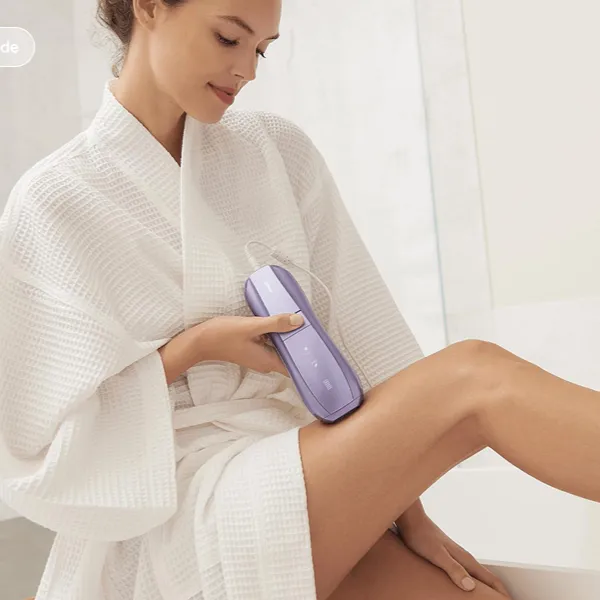
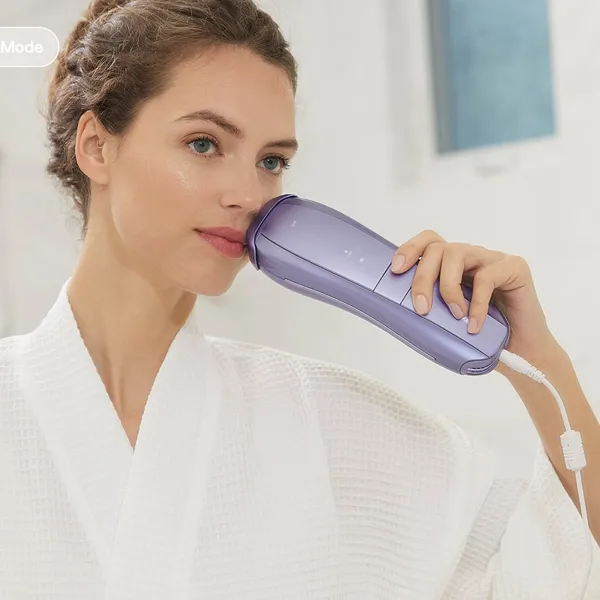
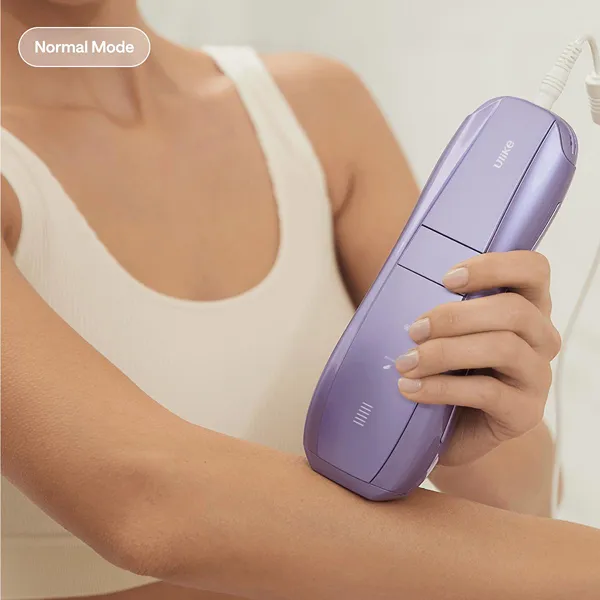
At home, you can reduce upper lip hair for longer periods, but true permanent removal is limited. IPL is usually the strongest home option when the hair is dark enough and the device is approved for facial use, while shaving, waxing, threading, and creams are temporary fixes. If the hair is very light, suddenly heavier, or barely responds after consistent IPL use, professional treatment is usually the more realistic path.
Why the upper lip needs extra care
The upper lip is small, visible, and easy to irritate, so the "fastest" method is not always the best one. Before choosing a method, check three things first: whether the product is approved for facial use, whether your skin is already irritated, and whether your hair type matches the method you want to use.
Facial skin can be more sensitive
Upper lip skin often reacts faster than areas like the legs or arms. Sun exposure, makeup, lip products, acne treatments, retinoids, and exfoliating acids can all make the area more likely to sting, redden, or develop tiny bumps after hair removal.
If you only want smooth skin for a weekend or a single event, a gentle temporary method may be smarter than starting an aggressive routine right before you need your skin to look calm. For longer-term reduction, it is better to start when your skin barrier is settled, not when it is dry, peeling, or already inflamed.
Only approved facial areas should be treated
Do not assume a body hair removal product is safe for the upper lip. IPL devices, wax strips, and depilatory creams should clearly allow facial or upper lip use; if the label only mentions legs, arms, underarms, or bikini areas, choose something else. With IPL, also avoid treating too close to the lips, nostrils, or any area the device manual excludes.
Irritation can be more noticeable
A small reaction on the upper lip can feel much bigger because it sits in the center of the face and moves when you talk, eat, or smile. Waxing may keep the area smooth longer but can leave redness; shaving is quick and often gentle but needs more frequent touch-ups; threading is precise but may trigger tenderness or bumps in reactive skin.
- For low-risk upkeep: choose the method your skin tolerates with the least redness.
- For longer gaps between sessions: waxing or threading may help, but only if your skin recovers well.
- For long-term reduction: consider IPL only if your hair and skin tone are a good match.
Patch testing matters
A patch test is worth doing even when the treatment area is tiny. Test a small spot exactly as the product or device instructions describe, then wait the recommended time before treating the full upper lip.
Do not judge only by the first few minutes. Delayed itching, dryness, darkening, bumps, or tenderness can appear later, and those reactions are much harder to ignore on the face than on the body.
How to use IPL on the upper lip
IPL can be useful for upper lip hair when the device is suitable for the face and the hair contains enough pigment for the light to target. Think of it as long-term reduction rather than a guaranteed permanent fix: the goal is usually slower, finer, patchier regrowth, with maintenance sessions as needed.
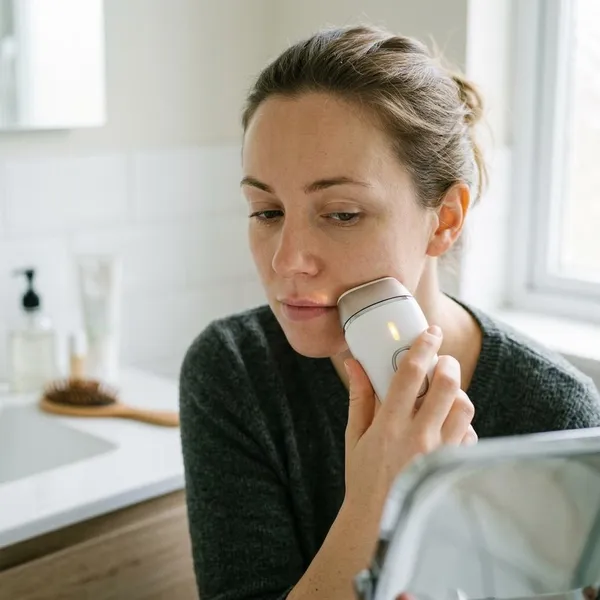
Check device compatibility
This is the first checkpoint, not a small detail. Confirm that your IPL device allows upper lip or facial use, then compare your hair color and skin tone with the device chart. Home IPL usually works best when there is clear contrast between darker hair and lighter surrounding skin.
Very light blond, red, gray, or white hair often responds poorly because there is not enough pigment for IPL to target. If your skin tone is outside the device's recommended range, do not try to "make it work" by lowering or guessing the setting; that can reduce safety without giving useful results.
Shave the hair first
Shave or trim the surface hair before using IPL so the light can focus below the skin rather than heating visible hair above it. Use a clean facial razor, work gently, and avoid scraping the area until it feels raw.
Do not wax, thread, pluck, or sugar right before IPL. Those methods remove the hair from the follicle, and IPL needs that follicle target to be present.
Start with a suitable setting
Use a conservative setting for the first full upper lip session, especially if your skin is sensitive or you are new to IPL. Warmth or a light snapping feeling can be normal, but sharp pain, lingering burning, or strong redness means you should stop.
A higher setting is not automatically better. For someone using IPL all year as a maintenance routine, a tolerable setting used consistently is usually more useful than a strong setting that makes the skin too irritated to continue.
Treat the area evenly
The upper lip is small, so uneven treatment is easy. Work in a simple left-to-right or right-to-left pattern, keep the device flat against the skin, and avoid flashing the same spot repeatedly unless the manual specifically allows it.
- Missed spots: can leave one side growing back faster.
- Too much overlap: can increase heat and irritation.
- Rushing: makes both problems more likely.
Follow the recommended schedule
IPL needs consistency because hairs are not all in the same growth stage at the same time. Follow the device's starting schedule, then move to maintenance only when regrowth has clearly slowed.
- Confirm facial-use approval and check the skin tone and hair color chart.
- Patch test and wait the full recommended time.
- Shave gently before treatment; do not remove the root.
- Use a controlled setting and an organized pattern.
- Complete the initial series before judging results.
- Use maintenance sessions if fine regrowth returns.
When should you consider professional treatment?
Professional treatment becomes worth considering when home care is taking time without giving much improvement, or when the hair pattern does not seem typical for you. Laser treatment may give stronger reduction for suitable dark hair, while electrolysis is usually the better-known option for permanent removal because it treats individual follicles and does not depend on hair color in the same way.

IPL gives little improvement
If you have used a facial-approved IPL device correctly for the full starting schedule and still see little thinning, do not keep repeating the same routine forever. A clinic can help judge whether your hair is too fine, the pigment contrast is too low, or a stronger laser or electrolysis plan would make more sense.
Hair is very light
Very light upper lip hair is often a poor match for IPL because light-based devices need pigment to target. In that situation, waxing, threading, or shaving can manage the hair temporarily, but they will not create permanent removal.
Electrolysis is usually the option to ask about when the hair is blond, red, gray, or white and the goal is permanence. It is slower because follicles are treated one by one, but that is also why it can be useful for small areas like the upper lip.
Regrowth is unusually persistent
Persistent regrowth does not always mean you are doing something wrong. Coarser hair, dense growth, or hormone-influenced hair can make the upper lip feel like it needs attention every few days, even with careful home maintenance.
For occasional visible hairs, temporary removal may be enough. If you are planning around the hair constantly or avoiding certain lighting, makeup, or close-up situations because of it, a professional consultation can save time and frustration.
Facial hair suddenly becomes heavier
A sudden increase in upper lip hair should not be treated only as a cosmetic problem. Gradual changes can happen, but a noticeable shift in thickness, darkness, or spread may be worth discussing with a doctor or dermatologist, especially if it appears alongside acne changes, irregular cycles, medication changes, or other new symptoms.
Conclusion
The practical answer is to use home methods for management and IPL for possible long-term reduction, but not to expect true permanence from at-home treatment. Start by checking facial-use approval, hair color, skin tone, and skin sensitivity; if those do not line up, professional advice is a better use of time than pushing a method that is unlikely to work.