IPL can be a good at-home option for reducing facial hair, but it is not something to use everywhere on the face. Start by checking three things: whether your device is approved for facial use, whether your skin tone and hair color are suitable, and whether you can follow the schedule without over-treating sensitive areas.
Where can you use IPL on the face
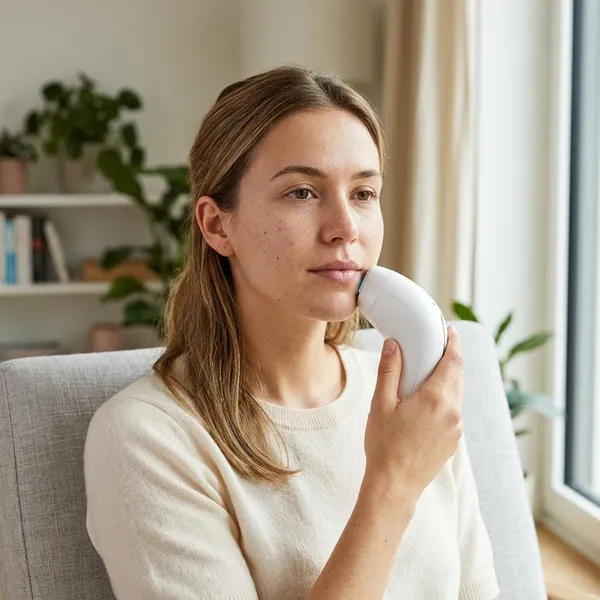
Most at-home IPL devices that allow facial use are meant for areas below the cheekbones, such as the upper lip, chin, and jawline. Do not use IPL near the eyes, on the eyelids, or over areas with permanent makeup, tattoos, dark moles, or irritated skin unless a qualified professional has told you it is safe.
Upper lip
The upper lip is one of the more practical facial areas for IPL because it is small and often has enough visible contrast between hair and skin. Use a mirror, keep the device flat, and avoid repeated flashes over the same narrow strip of skin, especially near the center of the lip where redness can show quickly.
If you are treating before a holiday, event, or photos, do not start the night before. Test the area earlier so you know whether your skin gets temporary redness or sensitivity.
Chin
Chin hair can respond to IPL, but it is often more stubborn than upper lip hair. Coarser dark hairs are better targets, while fine or light hairs may barely change. If the chin hair is linked to hormonal changes, results can also be slower and may need more maintenance.
- Good sign: regrowth becomes slower, softer, or patchier.
- Weak sign: the same hairs return quickly with no change after a full starting cycle.
- Stop-and-check sign: hair seems to spread or become denser instead of reducing.
Jawline
The jawline is suitable only if your device allows facial IPL below the cheekbones. The main challenge is contact: the treatment window needs to sit flat against the curved edge of the face. Work in small sections rather than dragging the device along the whole jaw.
This area is a good example of "slow and consistent beats high intensity." If you keep missing patches or flashing unevenly, a lower setting with better placement is usually safer than turning the device up.
Who gets the best results from facial IPL
The best results usually come from the right contrast: darker hair on skin that falls within the device's approved tone range. Consistency matters too, because IPL works gradually and only affects hairs that are in a responsive growth stage during treatment.
Think of facial IPL as long-term reduction, not a guaranteed way to remove every hair forever. For someone with a few dark upper-lip hairs, the routine may feel simple and worthwhile. For someone with mixed fine facial fuzz, light hair, or hormonally driven chin growth, the result can be less predictable.
People with darker facial hair
Darker facial hair tends to respond best because IPL targets pigment in the hair. Black and dark brown hairs are usually the strongest candidates; blonde, red, grey, white, or very fine peach fuzz often does not contain enough pigment for reliable results.
People within the device's skin tone range
Your skin tone has to be within the range approved by your specific device. This is not just about results; it is also a safety issue, because skin with more pigment may absorb more light and be more prone to burns or discoloration with unsuitable IPL settings.
Recheck this before summer use or after tanning. A setting that felt fine in winter may not be appropriate after beach days, outdoor sports, or self-tanner. If your skin is sunburned, freshly exfoliated, or irritated, wait.
People who can follow a regular treatment schedule
Facial IPL works best when you can follow the starting schedule in the manual, often weekly or every two weeks depending on the device. Random sessions make it harder to catch hairs at the right growth stage and harder to judge whether anything is improving.
If you know you will only use the device once before putting it away, waxing, threading, or shaving may be more realistic for short-term grooming. IPL makes more sense when you want a longer-term routine and are willing to track progress over several weeks.
How to use IPL on your face safely
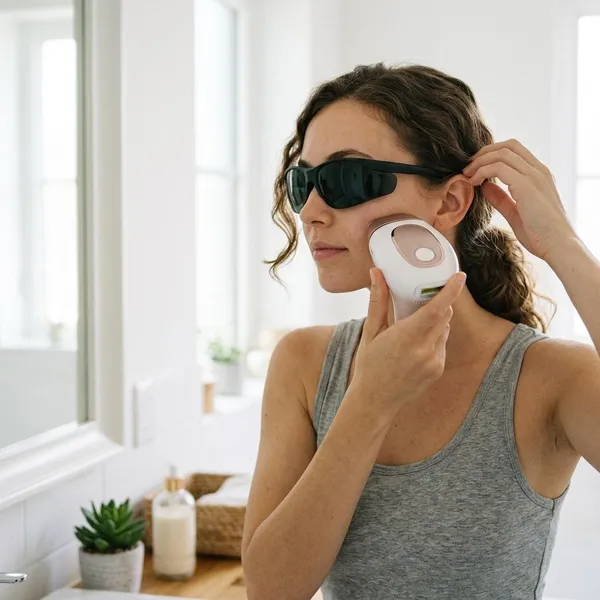
Before the first flash, prepare the area properly: shave or trim the hair, cleanse away makeup and skincare, dry the skin fully, and do a patch test if the manual recommends one. Do not wax, thread, or pluck right before IPL, because the hair root needs to be present for the light to target it.
The safest order is simple: confirm the device is face-safe, check your skin tone and hair color, choose the recommended facial setting, then treat small areas with controlled placement. Do not treat over active breakouts, broken skin, dark spots, tattoos, or areas that feel hot or irritated.
Choose a face-safe setting or attachment
Use the facial cap, precision attachment, face mode, or lower facial setting if your device provides one. A large body attachment can be awkward on the upper lip and jawline, and poor contact often leads to missed spots or accidental overlap.
Start at the recommended intensity
Begin with the setting recommended by the manual or the device's skin sensor. Higher intensity is not automatically better on the face; if it causes stinging, lingering redness, or a burning feeling, it is too aggressive for that session.
A cautious approach is especially sensible if you use actives such as retinoids, acids, or strong exfoliants in your skincare routine. If your skin barrier feels sensitive, pause those products as directed by your device instructions or ask a professional before treating.
Treat small areas without excessive overlap
Work one small patch at a time and move roughly one treatment-window width after each flash, unless your manual gives different instructions. The goal is even coverage, not multiple passes over the same skin.
- Upper lip: use good lighting and avoid rushing the center line.
- Chin: treat visible coarse hairs, not the whole lower face by habit.
- Jawline: pause until the device sits flat before each flash.
Follow the recommended schedule
Follow the schedule for your exact device rather than copying someone else's routine. Treating too often usually does not speed things up and can make facial skin irritated. Treating too rarely may make the results look inconsistent.
Stop if your skin reacts badly
Stop using IPL if you notice blistering, strong pain, unusual darkening, swelling, or irritation that does not settle. Mild temporary warmth can happen, but a reaction that feels wrong is a reason to pause rather than push through.
Get professional advice if symptoms are strong, if you are unsure whether a mark or mole can be treated around, or if facial hair appears thicker or more widespread after sessions. That kind of change is uncommon, but it is worth taking seriously on the face.

Conclusion
Facial IPL is worth considering when you have dark visible hair, a device approved for facial use, and the patience to follow a steady routine. It is not the best choice for eye-area hair, light peach fuzz, freshly tanned or irritated skin, or situations where you need instant smoothness, so make the safety check before the first flash rather than after a bad reaction.