
If hair is growing on or near a tattoo, the safest choice depends on one thing first: is the hair on the ink, or only on clear skin around it? Laser and IPL should stay off tattooed skin because the light can react with the pigment, while electrolysis may be an option for longer-term removal directly over a healed tattoo. For everyday upkeep, shaving and trimming are usually the lowest-risk choices once the tattoo has fully healed.
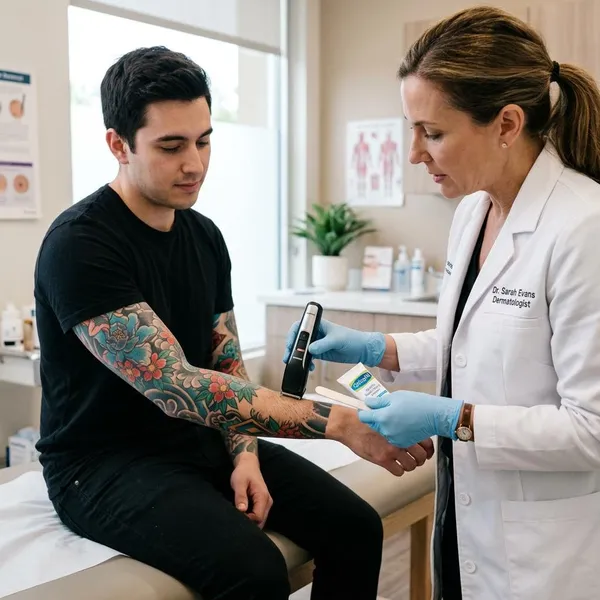
Safe hair removal options for tattooed skin
Start by separating temporary grooming from permanent removal. If you only want the area to look neat for summer, a holiday, or regular grooming, you probably do not need an aggressive method. If you want the hair gone long term from the tattooed area itself, the options narrow quickly.
Use this simple order before choosing a method:
- Fresh or irritated tattoo: wait. Do not shave, wax, laser, IPL, or treat broken skin.
- Healed tattoo and short-term upkeep: shaving or trimming is usually the practical route.
- Healed tattoo and smoother results: waxing may be possible if your skin tolerates pulling.
- Hair growing directly over the ink: ask about electrolysis, not laser or IPL.
Shaving for simple regular upkeep
Shaving is usually the easiest option for a fully healed tattoo because it cuts hair at the surface and does not target pigment. Use a clean razor, light pressure, and enough shaving gel or cream so the blade does not drag over the skin.
Trimming for low skin irritation
Trimming is better than shaving when your skin gets razor burn easily or the tattoo sits on a bony, curved, or high-friction area such as the ankle, ribs, wrist, or neckline. A guarded electric trimmer keeps the blade away from the skin, so there is less scraping and less chance of small cuts.
The tradeoff is simple: trimming will not feel perfectly smooth, but it is often the most comfortable option for regular upkeep.
Waxing after the tattoo has fully healed
Waxing can be used on a fully healed tattoo, but it is not the gentle option. It pulls hair from the root and also pulls on the skin, so avoid it completely while the tattoo is still healing or if the area is dry, cracked, sunburned, or irritated.
- Better fit: healed legs or arms where you want smoother skin for longer than shaving gives.
- Poor fit: fresh tattoos, very sensitive skin, active ingrown hairs, or raised tattooed areas.
- Smart first step: test a small patch before waxing the full tattooed area.
Electrolysis for longer-term removal
Electrolysis is the professional method most often considered when hair grows directly over tattoo ink. It treats individual follicles with a fine probe rather than using light that is attracted to pigment, so it avoids the main laser/IPL problem with tattoos.
It is slower than laser because each follicle is treated one by one, and several sessions are usually needed. For a small tattoo with a few stubborn hairs, that may be very manageable. For a large shaded sleeve or a dense area of body hair, you should expect a longer process and a proper consultation before committing.
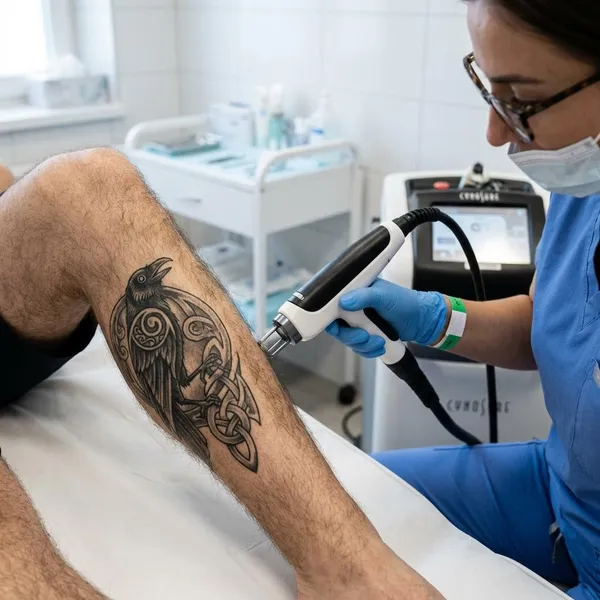
Can you remove hair around a tattoo?
Hair around a tattoo can often be treated differently from hair on the tattoo. Clear skin beside the design may be suitable for laser or IPL, but the ink itself should be treated as a no-go zone for light-based devices.
This matters most with tattoos that have uneven edges, dark outlines, or shaded sections. A small ankle tattoo with plenty of clear skin around it is a different situation from a full forearm piece where the hair grows right up to the ink. If there is not enough clean space to work safely, the provider should say so instead of trying to get close.
Laser can treat clear skin around the tattoo
Laser may be used on clear skin around a tattoo if the provider can keep the beam completely away from the ink. The tattoo edge should be easy to identify, and there should be enough untreated space to avoid accidental overlap.
A good clinic should be able to show you which areas they will treat and which areas they will leave alone. If the plan sounds like "we will just be careful near it," that is too vague for permanent ink.
IPL can treat clear skin around the tattoo
IPL follows the same basic safety rule as laser: do not flash it over tattooed skin. Although IPL and laser are not identical, both use light energy that can be absorbed by tattoo pigment.
Be especially cautious with at-home IPL near tattoos. It is easy to misjudge the edge on curved areas such as the shin, shoulder, or forearm, and home devices do not give you the same control or outside view that a trained provider has.
The tattoo itself should stay outside the treatment area
The tattoo should be fully excluded from any laser or IPL treatment area. If light energy hits tattoo pigment, the skin can heat quickly and may blister, burn, fade, blur, or heal with unwanted pigment changes.
The safest session is marked and planned before the device is used. The provider should identify the tattoo border, leave a safety margin, and explain what will be covered or avoided. If the tattoo cannot be protected clearly, choose another method for that area.
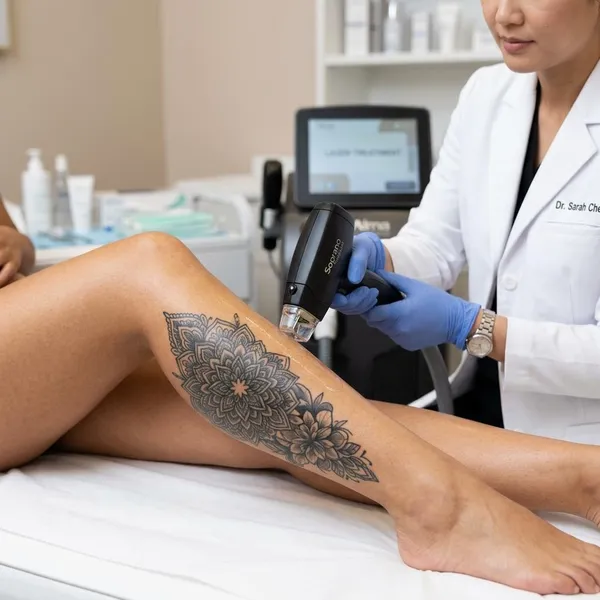
What to check before removing hair over a tattoo
Before doing anything, check three things in this order: healing, skin condition, and method. Most problems come from rushing a tattoo that is not settled, treating irritated skin, or using laser/IPL too close to ink.
- Look at the tattoo: no peeling, oozing, shiny patches, soreness, or broken skin.
- Look at the surrounding skin: no razor bumps, scratches, sunburn, active irritation, or ingrown hairs.
- Match the method to the hair location: on the ink needs a different plan than beside the ink.
- Ask how the tattoo will be protected: vague answers are a reason to pause.
Make sure the tattoo is fully healed
A tattoo should be fully healed before hair removal over it. Many tattoos need several weeks before the surface feels normal, and larger pieces, heavy shading, or areas that rub against clothing may take longer.
Do not judge by looks alone. If the skin still feels tight, tender, flaky, shiny, or raised, wait and ask your tattoo artist or a qualified provider before removing hair.
Check the skin for irritation
Irritated skin makes every hair removal method less predictable. Redness, bumps, scratches, dryness, ingrown hairs, or broken skin are signs to postpone shaving, waxing, electrolysis, laser, or IPL until the area calms down.
This is especially important if you are preparing for a professional appointment. Calm skin gives the provider a better starting point and makes aftercare simpler.
Tell the provider about the tattoo
Mention the tattoo before treatment starts, even if it seems obvious. Hair, lighting, faded ink, or partial clothing coverage can make a tattoo easier to miss during a quick setup.
Confirm how the tattoo will be protected
Ask a direct question before treatment: "How will you keep the tattoo out of the treatment area?" For laser or IPL, the answer should include marking, spacing, shielding, or clear avoidance of the ink. For electrolysis, it should cover hygiene, expected skin reaction, and aftercare.
If the answer is rushed or general, do not ignore that feeling. A careful plan matters more than a quick appointment when both skin and permanent ink are involved.
Conclusion
The safest decision is to treat tattooed skin and clear skin as separate areas. Use shaving or trimming for simple upkeep on healed tattoos, consider waxing only if your skin handles it well, and look into electrolysis when you want longer-term removal directly over ink. Laser and IPL can be useful around a tattoo, but only when the tattoo itself is clearly kept out of the treatment zone.


