
If your skin stings, reddens, or bumps up after ordinary hair removal, the best long-term choice is usually the method that reduces repeated irritation without overwhelming your skin barrier. Electrolysis is the most dependable option for true permanent removal of treated hairs, professional laser is faster for larger suitable areas, and home IPL is only a good fit when your skin tone, hair color, and patience match the device.

Which hair removal option is best for sensitive skin?
Start with three checks: your hair color, your skin tone, and how reactive the treatment area already is. Dark coarse hair on legs or underarms often gives laser a better chance of success. Pale, gray, red, or very fine facial hair usually points more toward electrolysis. Home IPL sits in the middle: convenient, but more limited and less forgiving if you ignore compatibility rules.
| Best fit | Method to consider first | Watch out for |
|---|---|---|
| Small facial areas, mixed hair colors, true permanence | Electrolysis | Slow progress because each follicle is treated individually |
| Larger areas with darker hair and suitable skin | Professional laser | Heat sensitivity, wrong settings, recent sun exposure |
| At-home upkeep with compatible skin and hair | Home IPL | Overuse, skipping patch tests, unrealistic expectations |
Electrolysis for permanent removal of treated hairs
Electrolysis is the strongest choice when you want treated hairs permanently removed rather than just reduced. It treats follicles one by one, so it can work on hair colors that laser and IPL often struggle with, including blond, red, gray, and white hair.
Professional laser for faster long-term reduction
Professional laser hair removal can be a good option when the area is larger and the hair has enough pigment for the laser to target. It is usually chosen for legs, underarms, bikini line, chest, or back because it covers more skin much faster than electrolysis.
- Better scenario: dark, coarse hair that causes frequent razor burn.
- More cautious scenario: recently tanned, sunburned, inflamed, or very reactive skin.
- Key advantage: a trained provider can adjust settings and use cooling support.
Home IPL for compatible skin and regular upkeep
Home IPL can suit mild to moderately sensitive skin if the device is appropriate for your skin tone and hair color. It tends to work best on darker hair and lighter to medium skin tones, although exact limits depend on the device.
What makes sensitive skin harder to treat?
Sensitive skin is harder to treat because it reacts not only to the hair removal method, but also to everything around it: heat, rubbing, sweat, active skincare, sun exposure, and existing irritation. A treatment can be technically suitable and still feel too harsh if the skin barrier is already stressed.
Skin can react more easily to heat
Laser and IPL depend on heat reaching the follicle, and electrolysis creates controlled damage inside the follicle. If your skin flushes from warm water, spicy food, or mild skincare, you may need lower settings, more cooling, or longer gaps between sessions.
"Stronger" is not automatically better for sensitive skin. A slower plan that your skin can tolerate usually beats a high-intensity session that forces you to stop treatment for weeks.
Friction can worsen redness and irritation
Friction is a hidden reason treatments feel worse than expected. Tight leggings after leg treatment, deodorant rubbing on freshly treated underarms, or underwear seams against the bikini line can keep mild redness irritated for much longer.
Existing irritation can make treatment uncomfortable
Do not treat over active razor burn, open scratches, sunburn, eczema flares, inflamed acne, or obvious folliculitis. That kind of skin is already sending a warning signal.
Skin sensitivity can vary by body area
Your legs may tolerate treatment easily while your upper lip, neck, underarms, or bikini line react strongly. Patch testing should happen on the actual area you plan to treat, not on a random less-sensitive patch of skin.
Someone who only wants smooth lower legs for summer has a different risk profile from someone treating facial hair year-round. Facial areas are visible, often more reactive, and less forgiving of prolonged redness, so conservative testing matters more there.
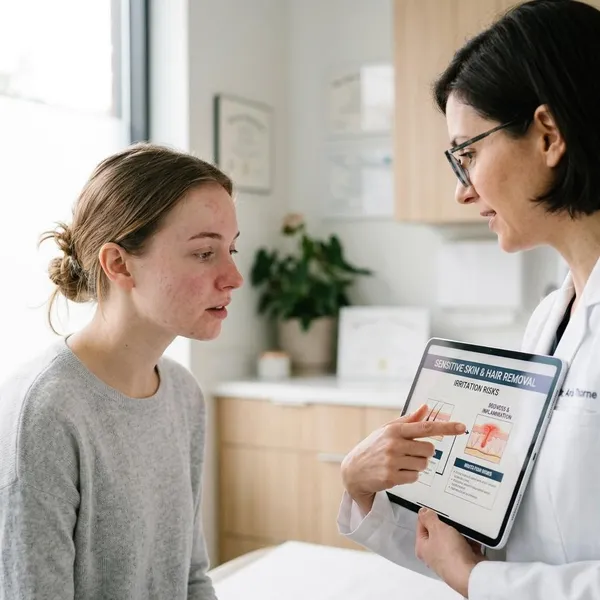
How to prepare sensitive skin for treatment
Good preparation removes avoidable triggers before the treatment even starts. The priority is to keep the skin barrier calm, follow the correct hair prep for the method, and avoid testing new skincare at the same time.
If you are choosing between booking now or waiting a few days for irritation to settle, waiting is usually the safer choice. Sensitive skin often handles repeated gentle sessions better than one poorly timed appointment.
Patch test before full treatment
A patch test is not optional when your skin is reactive. For laser or IPL, test a small area and watch for unusual redness, swelling, blistering, hives, strong pain, or pigment changes over the next day or two.
For electrolysis, ask whether a short trial is possible in the same area you want treated. A few temporary dots or redness can be normal; a reaction that keeps worsening is a sign to pause and get professional advice.
Avoid treating irritated skin
Postpone treatment if the area is sunburned, freshly waxed, scratched, inflamed, or actively breaking out. Treating over irritation can make the session more painful and may increase the chance of longer-lasting redness or discoloration, especially on skin prone to post-inflammatory marks.
Follow the recommended hair prep
Laser and IPL usually require shaving beforehand because the root needs to remain in place while long surface hair is removed. Waxing, threading, or plucking before light-based treatment can reduce results because the target hair root may be gone.
Electrolysis is different: the practitioner often needs enough visible hair to identify the follicle. Mixing up these rules is a common, very avoidable mistake.
Keep skincare simple before treatment
Use the most boring routine your skin tolerates: gentle cleanser, plain moisturizer, and no unnecessary fragrance or scrubs. If you use retinoids, exfoliating acids, benzoyl peroxide, or strong acne products, ask the provider how long to pause them for the treatment area.
- Do not introduce new products right before a session.
- Avoid heavy sun exposure before laser or IPL.
- Arrive with calm skin rather than trying to treat through irritation.
- Follow method-specific prep instead of copying rules from another treatment.
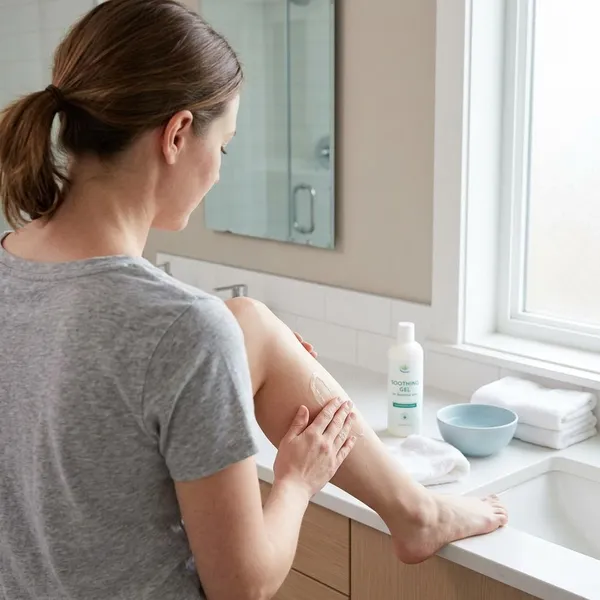
How to calm sensitive skin after treatment
Aftercare is where many sensitive-skin problems are either prevented or made worse. The first priority is to cool and protect the area; the second is to avoid adding heat, sweat, friction, or active ingredients while the skin is settling.
Plan the timing realistically. A bikini-line appointment right before a beach day, a hard workout, or tight clothing is asking a lot from reactive skin. A quieter day with loose clothes and simple skincare gives you a much better chance of an easy recovery.
Cool the treated area
Use a clean cool compress if the area feels warm, prickly, or flushed. Keep it gentle and avoid ice directly on the skin, which can create another irritation problem instead of calming the first one.
Use gentle skincare
A mild cleanser and a fragrance-free moisturizer are usually enough at first. Skip scrubs, exfoliating acids, retinoids, strong acne treatments, and heavily scented body products until the skin feels fully settled.
More products do not equal better healing. If the area is already reactive, piling on serums and creams can make it harder to tell what is helping and what is stinging.
Avoid heat and friction
Hot showers, saunas, steam rooms, hard workouts, tight waistbands, and rough fabrics can turn mild redness into a longer flare. For underarms, bikini line, neck, and inner thighs, this step can matter as much as the treatment settings.
- Choose loose clothing for the rest of the day.
- Use cool or lukewarm water instead of hot water.
- Delay heavy sweating if the area is still red or tender.
Protect treated skin from the sun
Recently treated skin can be more reactive to sunlight, especially after laser or IPL. Use shade, clothing, and broad-spectrum sunscreen once the skin can tolerate it comfortably.
This matters most for the face, arms, and lower legs because they are often exposed without much thought. If your skin is still red or tender, treat sun exposure as a risk rather than a small detail.
Stop if irritation becomes severe
Stop treatment and seek advice if you see blistering, hives, intense swelling, worsening pain, crusting, signs of infection, or discoloration that keeps increasing. Mild warmth or temporary redness can happen, but severe reactions are not something to push through.
If the reaction happened with home IPL, do not repeat the session at a lower setting the next day. Pause, review compatibility and timing, and wait until the skin has fully recovered before deciding whether to continue.
Conclusion
The safest choice is the one that matches your hair, skin tone, treatment area, and tolerance for recovery. Pick electrolysis when precision and true permanence matter most, consider professional laser for faster reduction on suitable larger areas, and use home IPL only if you can patch test carefully and follow the schedule without rushing your skin.


