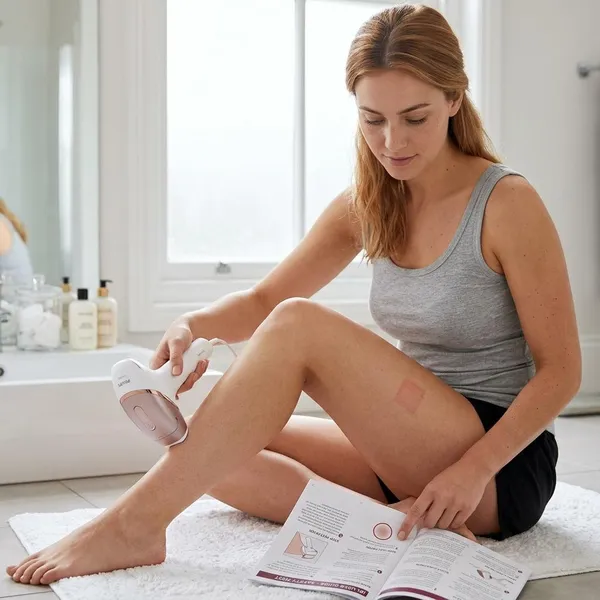
Permanent facial hair removal at home is not realistic in the strict sense, but long-term reduction can be. Home IPL and laser devices may make dark, visible facial hair grow back slower, finer, and less densely, while shaving, creams, waxing, and threading are still temporary fixes. The first thing to check is not the device brand, but whether your hair color, skin tone, and treatment area are actually suitable.

Which at-home methods can reduce facial hair long term?
The at-home methods with real long-term reduction potential are light-based devices, mainly IPL and home laser. They work only when the hair has enough pigment for the light to target, so they are not a good match for every type of facial hair.
| Method | Best for | What to expect |
|---|---|---|
| IPL | Dark, visible facial hair on approved areas | Gradual reduction with repeated use |
| Home laser | Small areas with coarse, pigmented hair | More targeted treatment, still not guaranteed permanent |
| Shaving or depilatory creams | Fast removal before work, photos, or daily upkeep | Hair returns quickly because the follicle is unchanged |
| Waxing or threading | A cleaner look for several days or weeks | Longer temporary results, with possible irritation |
Can Ulike IPL reduce facial hair at home?
Ulike IPL may reduce facial hair at home for suitable users, but it should be viewed as long-term reduction rather than permanent removal. The result you are looking for is usually less frequent regrowth, softer texture, and less visible shadow.
Before using a Ulike IPL device on facial hair, check the instructions for your exact model and limit treatment to approved areas below the cheekbones, such as the upper lip, chin, and jawline. Never use the device around the eyes, on the eyebrows, or above the cheekbones. You should also confirm that your skin tone and hair color fall within the compatibility chart for that model.
Ulike IPL targets pigment in unwanted facial hair
Ulike IPL works by directing light toward melanin in the hair. Dark brown or black facial hair gives the device a clearer target, while blond, red, gray, white, or very fine hair usually gives it much less to work with.
This is also why deeper skin tones need extra caution. More melanin in the skin can increase the chance of unwanted heat in the skin itself, so the brand's skin-tone chart and built-in safety guidance matter more on the face than on less visible body areas.
Repeated treatments can reduce visible regrowth
A single IPL session is not a fair test. Facial hair grows in cycles, and repeated use is needed to catch more follicles at responsive stages.
Remaining hair can become finer and less noticeable
For facial hair, finer regrowth can be just as useful as fewer hairs. A few soft hairs on the chin are much easier to manage than coarse stubble that shows through makeup or feels rough by the next day.
Maintenance treatments may still be needed
Maintenance does not mean the device failed. IPL can reduce activity in treated follicles, but some follicles may recover and new hormonally influenced hairs can appear later.
This matters especially for long-term facial hair concerns such as chin regrowth that keeps returning. If you want the lowest-maintenance option possible, IPL may help; if you want each follicle permanently disabled, professional electrolysis is the more appropriate route.
Who is most likely to get good results from home IPL?
The best home IPL candidates usually have dark, visible facial hair, a skin tone approved for the device, and enough patience to follow the treatment schedule. The weakest candidates are often people trying to treat very fine peach fuzz, very light hair, or areas too close to the eyes.
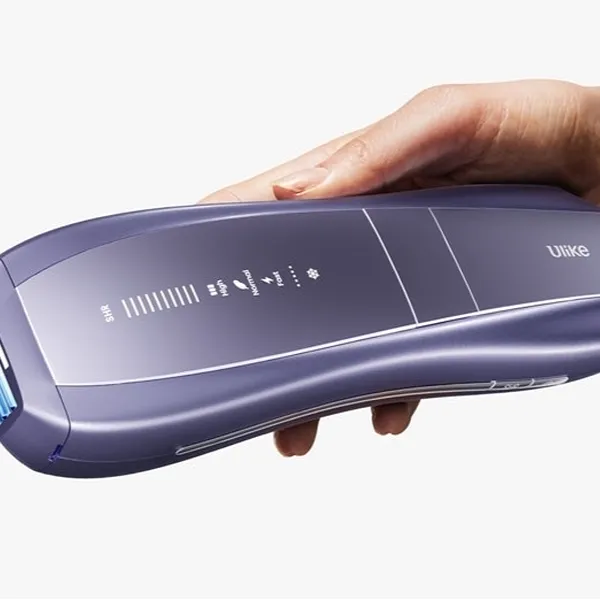
People with darker facial hair
Darker facial hair gives IPL a stronger target because it contains more melanin. Coarse black or dark brown chin hairs and visible upper-lip growth are more likely to respond than pale, red, gray, or white hairs.
People with compatible skin tones
Skin-tone compatibility is a safety check before it is a results check. If your tone is outside the device's approved range, do not try to "test it anyway" on the face; burns, dark marks, or light patches are more noticeable there and may take time to fade.
- Check the device chart in natural light rather than guessing from memory.
- Do not treat recently tanned skin unless the manual clearly allows it.
- Be more cautious with pigment-prone skin and stop if marks or lingering irritation appear.
People with coarse visible regrowth
Coarse visible regrowth usually gives home IPL a better starting point. If your issue is a few dark hairs that come back on the chin every week, reduction may be noticeable; if your issue is soft fuzz across the cheeks, the payoff is often much weaker.
People who can follow a consistent treatment schedule
Consistency is the part many people underestimate. Light-based devices work gradually, so random treatments before special occasions are unlikely to change the growth pattern much.
For daily or weekly facial-hair stress, a routine may be worth it. For someone who only removes hair once in a while before a holiday or event, shaving, threading, or waxing may be simpler than owning a device and maintaining a schedule.
How to use light-based devices safely on facial hair
Facial use needs stricter judgment than body use because the eyes are nearby and irritation is harder to hide. The safest approach is to treat only approved areas, start conservatively, and stop quickly if the skin reacts badly.
- Confirm the area first. Upper lip, chin, and jawline rules vary by model.
- Prepare clean, dry skin. Remove makeup and follow the device's hair-prep instructions.
- Patch test before a full session. Wait for the reaction window recommended by the brand.
- Use the advised intensity. Higher settings are not a shortcut on facial skin.
- Pause for warning signs. Pain, blistering, swelling, or lasting color changes are not normal.
Check the approved facial treatment areas
Device manuals are not all the same. For Ulike IPL devices, facial treatment should be limited to approved areas below the cheekbones, such as the upper lip, chin, and jawline. Do not use the device around the eyes, on the eyebrows, temples, forehead, or any area above the cheekbones.
If your main concern is hair near the brows, temples, or close to the eyes, do not improvise with IPL or home laser. That is a situation where threading, tweezing, or professional advice is safer.
Keep treatments away from the eyes and eyebrows
Do not use Ulike IPL around the eyes, on the eyebrows, or anywhere above the cheekbones. Wear the protective eyewear supplied with the device during every treatment. The skin-contact sensor is an additional safety feature, but it is not a substitute for eye protection.
Patch test before treating a larger area
A patch test is especially worth doing on the face because a bad reaction is visible. Treat a small spot with the intended setting, then wait for the time recommended by the manufacturer before covering a larger area.
Repeat the patch test if you change devices, increase intensity, or move from one facial zone to another. Skin that tolerates the chin setting may not react the same way on the upper lip.
Follow the recommended intensity and schedule
More flashes or higher power will not automatically produce faster reduction. Overuse is more likely to cause irritation, while underuse can make the device look ineffective before it has had a fair chance.
Stop if significant irritation develops
Stop treating if you notice strong pain, blistering, swelling, prolonged redness, or skin color changes. A short pause is not a setback; pushing through a reaction on facial skin can turn a small problem into a longer-lasting mark.
Conclusion
If you want less visible facial hair with less frequent upkeep, home IPL or a home laser device may be worth considering when your hair and skin are a good match. If you want true permanence, especially for stubborn hormonal chin hair or hair that light-based devices cannot target, electrolysis is the more realistic choice. Start with compatibility and safety, then choose the method that fits the amount of maintenance you are actually willing to keep doing.