
With PCOS, permanent hair removal is possible for hairs that are successfully treated, but it cannot stop your hormones from activating new follicles later. The practical choice is usually this: use laser when you have a larger area of dark, coarse hair to reduce, and use electrolysis when you want true permanent removal of specific hairs, especially on the face.
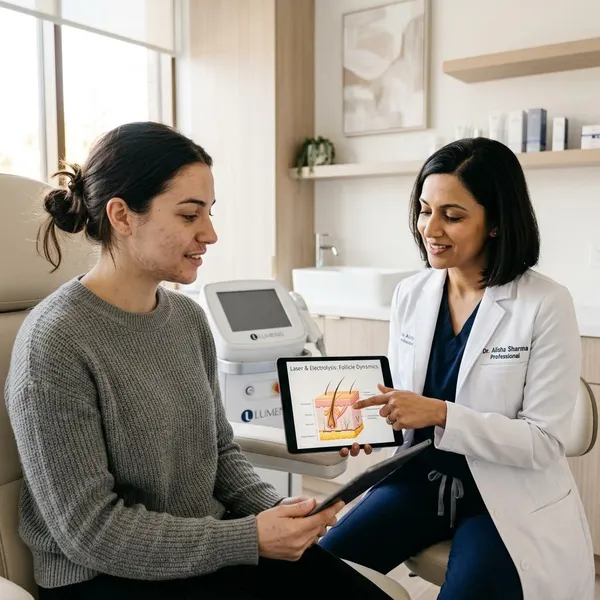
Why PCOS hair can grow back
PCOS hair growth is frustrating because the visible hair is only part of the problem. Hair removal can treat follicles that are active now, but PCOS may keep sending the hormonal signals that make new coarse hairs appear later.
Hormones can keep stimulating new hair
Higher androgen activity is a common reason PCOS hair becomes darker, thicker, and more persistent. Even after good treatment results, those hormones may encourage nearby follicles to start producing terminal hair months later.
Untreated follicles can become active
Hair removal only works on follicles that can be treated at the time of the session. Dormant follicles are not always visible, and they cannot be fully dealt with before they start producing a hair.
- Laser: best at targeting active dark hairs with enough pigment.
- Electrolysis: treats individual follicles, but the hair still needs to be located and treated correctly.
- PCOS regrowth: often comes from new activity, not necessarily failure of every previous session.
Hair removal does not treat the hormonal cause
Laser, electrolysis, shaving, waxing, threading, and IPL deal with hair at the skin or follicle level. They do not lower androgen activity or treat PCOS itself.
If your hair growth is getting worse quickly, spreading into new areas, or changing alongside irregular periods, acne, or weight changes, it is worth speaking with a clinician. Cosmetic treatment can make the hair easier to manage, but hormone management may reduce how much new growth you have to keep chasing.
Best long-term hair removal options for PCOS
The first thing to check is your hair type, not the marketing promise. Dark coarse hair over a larger area usually points toward laser first; light, grey, red, white, or isolated stubborn hairs usually point toward electrolysis.
Laser for reducing dark coarse hair
Laser is usually the most efficient option when you have a lot of dark, coarse hair, such as on the chin, neck, underarms, bikini line, stomach, or legs. It can reduce density, slow growth, and make shaving less frequent.
It is not the best choice for every hair. Blonde, grey, red, white, or very fine hairs often respond poorly because laser depends on pigment. If you have darker skin, laser may still be an option, but the device type, settings, and provider experience matter much more because the risk of burns or pigment changes can be higher with the wrong approach.
Electrolysis for permanent removal of treated hairs
Electrolysis is the strongest option when permanence matters more than speed. It treats one follicle at a time, and a successfully treated follicle should not grow that same hair again.
The trade-off is time. If you are shaving a dense full-face area every day, starting with electrolysis alone can feel slow and expensive. If you are dealing with ten obvious chin hairs that bother you every morning, electrolysis may be exactly the direct solution you want.
Combined treatment for mixed or stubborn regrowth
A combined plan often makes the most sense for PCOS: laser first to reduce the bulk of dark hair, then electrolysis for the hairs laser cannot finish well.
| Situation | Better starting point | Why it helps |
|---|---|---|
| Dense dark facial or body hair | Laser | Covers more follicles per session |
| Light, grey, red, or white hairs | Electrolysis | Does not rely on pigment in the hair |
| Mostly reduced hair with a few visible strays | Electrolysis | Targets the remaining hairs precisely |
| Mixed dark and light regrowth | Laser plus electrolysis | Uses each method where it performs best |
When electrolysis works best for PCOS
Electrolysis is not always the fastest route, but it is often the most decisive one for small, visible, stubborn areas. It works especially well when you want to stop dealing with the same individual hairs over and over.
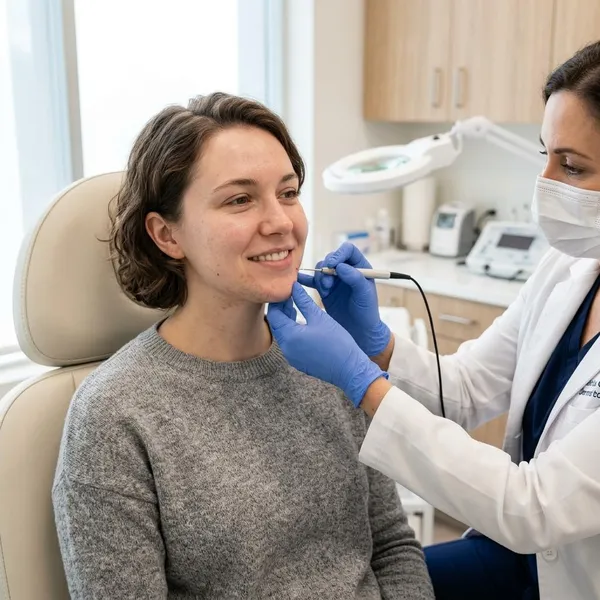
You want permanent removal of individual hairs
If one cluster of chin hairs, upper-lip hairs, or neck hairs is the part that bothers you most, electrolysis is usually a better fit than repeating broad treatments. The practitioner can focus on the exact follicles you want gone.
Your hair is light or mixed in colour
Electrolysis becomes especially useful when the hair is too light for laser. This includes blonde, red, grey, white, or mixed-colour hairs that still show up in bright light.
This often happens after laser has already done its job on the darkest hairs. At that stage, more laser may bring little extra benefit, while electrolysis can treat the remaining visible hairs one by one.
You are treating smaller stubborn areas
Small areas are where electrolysis feels most practical: under the chin, upper lip corners, sideburn edges, areola hairs, a narrow abdominal line, or a few jaw hairs that keep standing out.
- Good fit: scattered hairs you can count or point to easily.
- Less ideal as a first step: very dense, large areas where laser could reduce volume faster.
- Common mistake: paying for more laser when the remaining hairs no longer have enough pigment to respond well.
How to improve long-term results
The best results usually come from matching the method to the hair, finishing the planned sessions, and treating PCOS as more than a cosmetic issue. Skipping one of those pieces can make a good treatment look less effective than it really is.
Follow the full treatment schedule
Do not judge laser or electrolysis after one or two appointments. Hair grows in cycles, so repeated sessions are needed to catch more follicles when they are treatable.
Keep up with recommended touch-ups
Touch-ups are common with PCOS, especially after laser. They are not always a sign that treatment failed; they may simply be needed because new hormone-stimulated hairs have appeared.
For someone who had heavy daily shaving before treatment, an occasional maintenance session may still be a major improvement. For someone with only a few new hairs, electrolysis touch-ups may be more sensible than restarting a full laser course.
Address ongoing hormonal hair growth with a clinician
If the hair keeps increasing despite cosmetic treatment, bring the hormonal side into the plan. A clinician can discuss whether PCOS treatment, medication, insulin resistance support, or further testing is appropriate for your situation.
Be especially cautious if hair growth becomes sudden, severe, or noticeably different from your usual pattern. PCOS is common, but it should not be assumed without proper medical context.
Conclusion
The most realistic approach is to separate "permanent removal of treated hairs" from "no new PCOS hair ever again." Electrolysis is the better choice for permanent removal of specific hairs, laser is often better for reducing larger areas of dark coarse hair, and many people do best by using both at different stages. If you choose based on your actual hair colour, treatment area, and hormone pattern, the process becomes much less random and easier to maintain.


