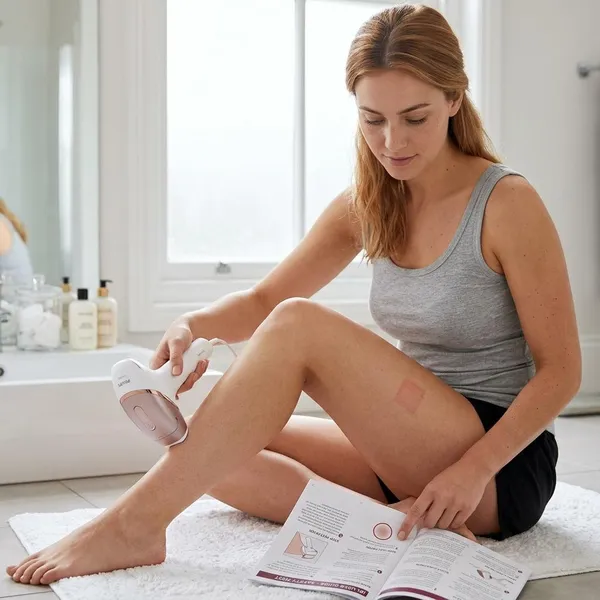
Men's permanent hair removal at home can reduce thick body hair, but it is better to think of it as long-term hair reduction rather than a promise that every hair is gone forever. The first things to check are your skin tone, hair color, treatment area, and whether you can keep up with repeated sessions. If those match well, at-home IPL is usually the easiest starting point for large body areas, while laser options are better for more targeted or stubborn hair.
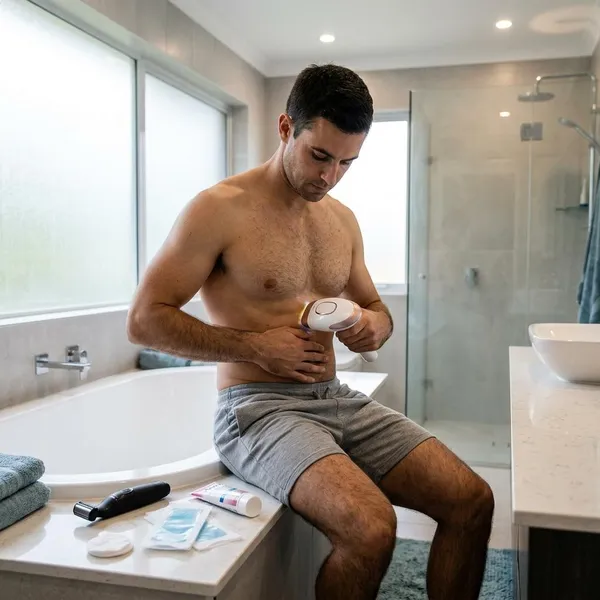
Best At Home Hair Removal Options for Men
The right method depends less on marketing claims and more on what you are treating. A full chest, a few shoulder patches, and a dense back are not the same job, even if they all fall under men's hair removal.
IPL devices for large body areas
IPL devices are often the best home choice for men who want to reduce hair on the chest, stomach, arms, or legs. The wider flash window on many IPL devices helps cover more skin faster, which matters if you are treating a full torso instead of a small patch.
They tend to work best when the hair is dark and the skin is within the device's approved tone range. Coarse male body hair can respond well because it often contains plenty of pigment, but dense growth usually needs more sessions before the thinning looks even.
Home laser devices for targeted treatment
A home laser device makes more sense when accuracy matters more than speed. It can be useful around a stomach trail, small shoulder patches, hands, feet, or the edge of a chest area where you do not want to treat too broadly.
The trade-off is time. Smaller treatment heads feel precise on narrow areas but frustrating on a full chest or both legs. Also check the approved body zones before buying, because many home-use devices are not designed for dense male beard or neck hair.
Professional laser for stronger reduction
Professional laser is the strongest option and is often the better choice for thick back hair, broad shoulders, or areas you cannot reach evenly. A clinic can use stronger equipment and adjust settings for your skin tone, hair thickness, and treatment area.
Best Body Areas for Men's At Home Hair Removal
The easiest areas are the ones you can see, shave cleanly, and treat in straight sections. The more awkward the angle or the more sensitive the skin, the more cautious you need to be.

Chest and stomach hair
The chest and stomach are usually the best places to start. You can see what you are doing, divide the area into sections, and notice quickly if your skin is becoming too irritated.
Back and shoulder hair
Shoulder patches and the upper back can be manageable at home, especially with help. A full back is different: missed spots are common, and uneven flashing can leave the reduction looking patchy.
If you live alone or cannot comfortably reach the area, this is one of the clearest cases where professional laser may be worth the extra cost. The issue is not only power; it is even coverage.
Arms and legs
Arms and legs are good candidates for home treatment because they are easy to split into sections. Legs take longer because the area is large, while arms are usually quicker if the goal is thinning rather than full smoothness.
- Sports or gym use: thinning may be enough and easier to maintain.
- Year-round smoothness: expect more patience and regular maintenance.
- Summer treatment: plan around tanning, because recently tanned skin may be more reactive.
Areas requiring extra caution
Be careful with the beard, neck, genitals, tattoos, dark moles, broken skin, or recently irritated skin. Light-based devices target pigment, so darker marks and tattoo ink can absorb energy in risky ways.
Male facial hair is a special case because it is usually much denser than body hair. Do not use IPL or laser on the beard or neck unless the device clearly approves that use for men, and stop if the area reacts strongly instead of trying to "push through" irritation.
At Home IPL vs Laser vs Professional Treatment
All three options aim to reduce growth over time, but they are not equal in strength or effort. The biggest mistake is expecting a home device to behave like a clinic machine after a few sessions.
Differences in power and treatment speed
Professional laser is usually faster because clinics use stronger equipment and can tailor settings more closely. Home IPL is gentler and usually needs a longer routine, often with repeated early sessions followed by occasional maintenance, depending on the device instructions.
Home laser sits in a middle ground for precision, not necessarily for speed. It may feel more targeted than IPL, but the smaller treatment area can make large zones take much longer.
Differences in cost and convenience
Home devices usually cost less over time if you use them regularly. That is a good fit for someone treating the chest, stomach, arms, or legs at home and who does not mind building it into a routine.
Professional treatment costs more per session, but it can be more convenient for areas like the back because someone else handles the coverage. Convenience is not just price; it is whether you can actually complete the treatment properly.
| Best fit | Most practical choice | Main caution |
|---|---|---|
| Full chest or stomach | At-home IPL | Needs consistency over several weeks |
| Small patches or edges | Home laser | Can be slow on large areas |
| Dense back or shoulders | Professional laser | Higher cost, multiple visits likely |
How to Choose the Right Hair Removal Device for Men
Choose the device that matches your body, not the one with the boldest "permanent" claim. For men, the most important order is compatibility first, then safety, then treatment speed, then price.
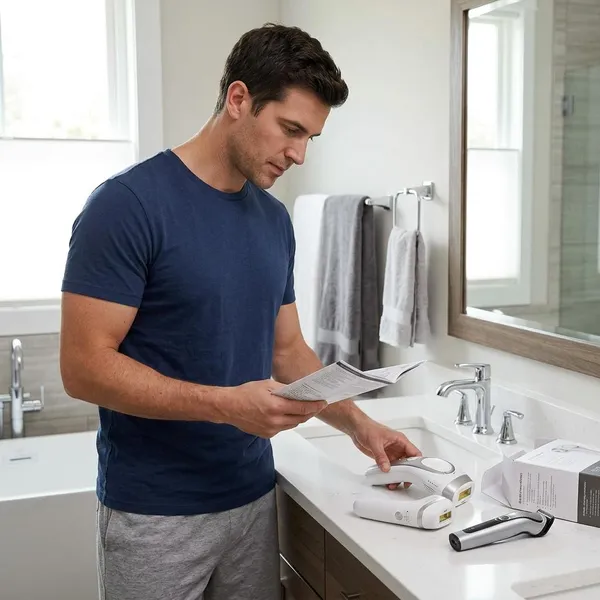
Check skin tone and hair compatibility
Start with the manufacturer's skin tone and hair color chart before looking at features. Light-based hair removal works best when there is enough contrast between the hair and skin, so dark hair on a supported skin tone usually has the best chance of responding.
Look for cooling and safety features
Cooling is not just a comfort extra. If treatment feels too sharp on coarse hair, many people lower the intensity too far or stop using the device, which weakens the routine.
Useful safety features include skin tone sensors, contact sensors, and auto-lock functions that prevent flashing when the device is not placed correctly. FDA-cleared home-use devices can be a safer comparison point, though clearance does not guarantee the same results for every user.
Consider treatment window size for larger areas
A larger treatment window is worth prioritizing if you want to treat your chest, stomach, arms, or legs. It reduces session time and makes it easier to cover broad areas without losing patience.
A smaller window is better for control around curves or narrow patches. If you are buying mainly for your back, be honest about reach: even a good device can disappoint if you cannot place it evenly.
Compare device quality and long-term value
Value comes from a device you will keep using. Look for clear instructions, enough flashes for repeated body treatments, reliable output, comfortable handling, and reviews from men with similar hair density and treatment goals.
- Check compatibility first: wrong skin or hair match usually means weak results.
- Pick a realistic treatment area: chest is easier than full back.
- Do a patch test: wait and see how your skin reacts before treating a large zone.
- Avoid unsupported areas: especially beard, neck, genitals, tattoos, and irritated skin.
Conclusion
At-home hair removal can be a good choice if your hair and skin are compatible, the area is realistic to treat, and you are willing to repeat sessions long enough to see reduction. IPL is usually the easiest home option for larger body areas, home laser is better for smaller targeted zones, and professional laser is the smarter move when the hair is dense, hard to reach, or too easy to treat unevenly on your own.