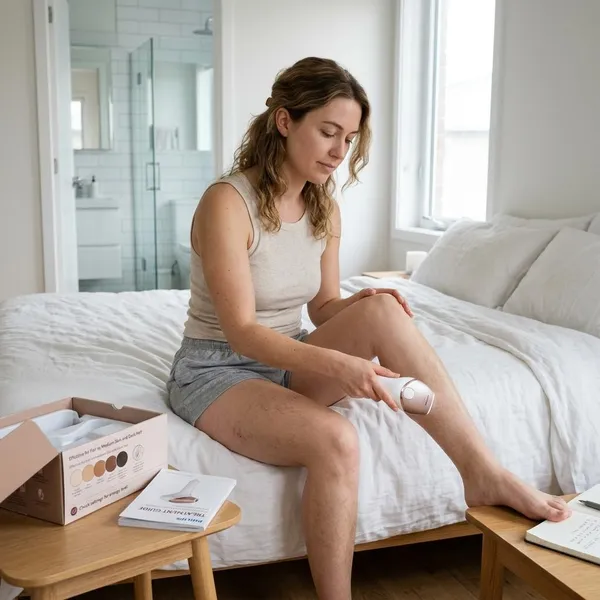
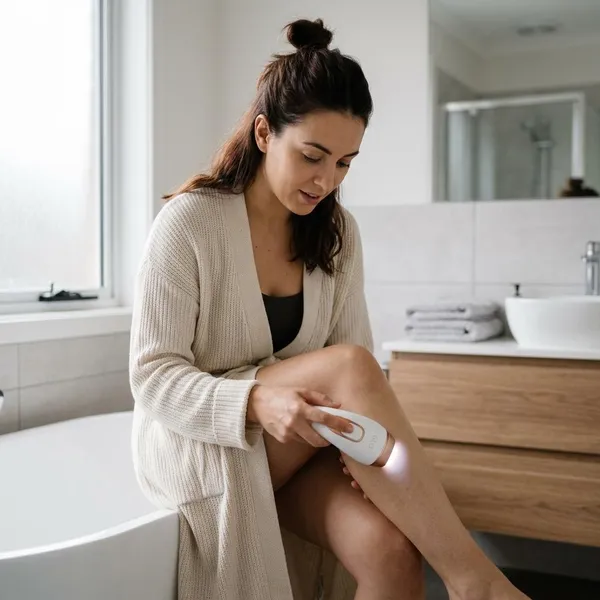
SHR hair removal is usually not permanent in the strict "no hair ever comes back" sense. A better expectation is long-term hair reduction: less hair, slower regrowth, and softer stubble after a full course, with occasional maintenance for some people.
How Does SHR Hair Removal Work?
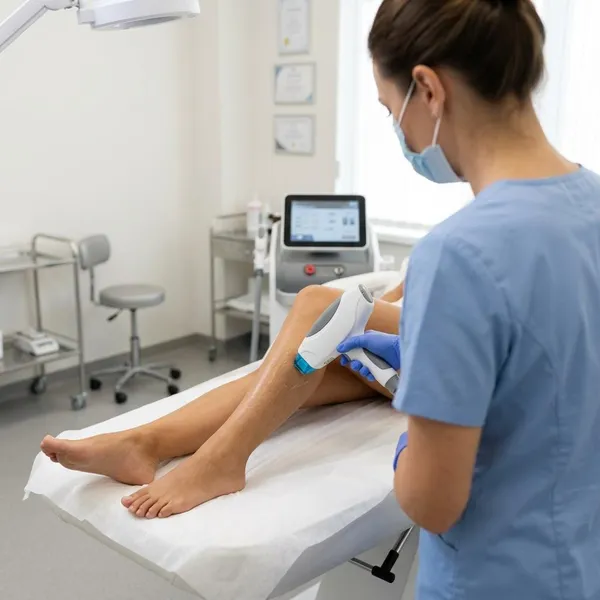
SHR, short for Super Hair Removal, uses repeated light pulses while the handpiece glides over the skin. Instead of one strong flash on each spot, the area is heated gradually. The aim is to weaken the follicle enough that future hair grows back more slowly, more finely, or not visibly at all.
The most important thing to understand is that SHR depends on both pigment and timing. It works best when the light can identify the hair clearly and when that hair is in an active growth stage.
Light energy targets pigment in the hair
The light energy is mainly absorbed by melanin, the pigment in the hair. Dark, coarse hair gives the device a clearer target, which is why underarms, bikini lines, and lower legs often respond better than pale or very fine facial hair.
White, gray, red, and very light blond hairs are harder to treat with light-based systems because they contain less usable pigment. If your hair is light, the first thing to ask at a consultation is not "how many sessions?" but "is there enough pigment for SHR to work well on this area?"
Gradual heating affects hair-producing structures
SHR builds heat through repeated passes. That heat is intended to affect the follicle structures involved in producing new hair, without the sharp single-pulse feeling some people associate with older laser or IPL treatments.
Why the in-motion technique improves comfort
The in-motion technique keeps the handpiece moving, so heat is spread more evenly instead of being concentrated in one sudden spot. This can make sensitive areas feel more manageable and can make larger areas, such as legs or the back, easier to complete in one session.
Why Can Hair Grow Back After SHR?
Hair can grow back after SHR even when the treatment was done correctly. That does not mean the treatment failed. SHR can reduce many active follicles, but it cannot control every future hormonal change, dormant follicle, or hair that was not in the right growth stage during treatment.
Hair growth cycles affect treatment timing
Hair grows in cycles, and SHR works best during the active growth phase. Since not every hair is active at the same time, one session cannot treat the whole area equally.
- Too few sessions: many follicles may never be treated at the right time.
- Sessions too far apart: progress can slow because timing becomes less consistent.
- Sessions too close together: there may not be enough newly active hair to target.
Some follicles may remain active after treatment
Some follicles are only partly affected, especially if the hair is fine, the area is difficult to treat evenly, or lower settings are used for skin safety. Those follicles may later produce hair again, but it is often thinner or less noticeable than before.
A practical way to judge success is shaving frequency. If you used to shave every two days and now only touch up once a week, SHR is doing something useful even if a few hairs are still present.
Hormones and treatment areas influence regrowth
Hormonal areas need more realistic expectations. The chin, upper lip, neck, lower abdomen, and bikini line can be more prone to future regrowth than lower legs or underarms.
If you have PCOS, thyroid changes, menopause-related hair changes, or persistent facial hair, SHR may still reduce the amount of visible hair, but maintenance is more likely. In that situation, the goal is often control rather than complete clearance.
SHR Results Timeline and Maintenance
SHR results build gradually. Most people notice changes in regrowth speed and texture before they see a fully smooth-looking area. Patchy regrowth during the middle of a course is common and often means different follicles are responding at different times.
When visible hair reduction usually appears
Many people start seeing visible reduction after about 3 to 4 sessions, although this varies. Coarse dark hair may respond sooner, while fine facial hair or hormonally influenced areas may take longer.
Look for everyday signs: longer gaps between shaving, softer stubble, fewer ingrown hairs, and less dense regrowth. These changes are usually more useful than checking for perfect bare skin after every session.
How many sessions are commonly needed
A common course is around 6 to 10 sessions, but the right number depends on the area, hair color, hair thickness, skin tone, and hormonal factors. Facial areas often need more patience than underarms or legs.
| Situation | Expectation to discuss |
|---|---|
| Coarse dark underarm or leg hair | Often clearer reduction within the main course |
| Fine facial hair | May need more sessions and more cautious expectations |
| Hormone-related growth | Maintenance is more likely after the initial course |
| Light, gray, or red hair | Ask first whether SHR is likely to be effective enough |
When touch-up treatments may be required
Touch-ups may be needed every few months, yearly, or only occasionally. Someone treating lower legs for easier year-round shaving may need very little maintenance, while someone managing chin hair may prefer scheduled top-ups to stay ahead of new growth.
A touch-up is not a sign that the original course was pointless. It usually means the baseline has improved, but some follicles stayed active or became active later.
Who Gets the Best Results From SHR?
The best results usually happen when the hair has enough pigment and thickness for the light to target. Skin tone also matters, but the device, settings, and operator experience are just as important as the label on the treatment menu.
Hair colors and skin tones that respond well
Dark brown and black hair usually respond best. Medium to darker skin tones may be treatable with suitable SHR systems and careful settings, but recent tanning, sensitivity, and pigmentation history should be taken seriously.
Be cautious if a provider promises strong results on white, gray, red, or very pale blond hair without explaining the limits. With too little pigment, light-based hair removal has less to work with.
Body areas commonly treated with SHR
Common SHR areas include the underarms, legs, bikini line, arms, upper lip, chin, cheeks, chest, back, and stomach. Larger body areas can be practical because the handpiece glides continuously.
- For daily shaving frustration: legs, underarms, and bikini line often give the most noticeable lifestyle payoff.
- For facial hair control: results can be valuable, but expect a slower, more maintenance-based plan.
- For occasional grooming only: SHR may still help, but the cost and session schedule should feel worth it compared with shaving or waxing.
Preparing for SHR Treatment and Aftercare
Preparation and aftercare affect both comfort and results. The main priorities are simple: keep the follicle available for targeting, avoid extra skin irritation, and protect treated skin from heat and sun.
How to prepare before a session
Shave the area before your appointment if your provider asks you to, often around 24 hours beforehand. Do not wax, pluck, thread, or epilate before SHR, because those methods remove the hair structure the light needs to target.
- Avoid strong sun exposure: recently tanned skin can be more reactive.
- Skip self-tanner: it can interfere with skin assessment and light absorption.
- Arrive with clean skin: avoid heavy lotions, oils, deodorant, or makeup on the treatment area unless told otherwise.
- Mention medications or skin treatments: especially anything that increases light sensitivity.
What happens during treatment
You will usually wear protective eyewear, and the provider may apply gel or use a cooled handpiece. The device is moved across the skin while delivering repeated pulses, often feeling like warmth, tingling, or mild prickling.
Small areas such as the upper lip may take only a short time; full legs or the back take longer. Mild redness or warmth afterward is common, but strong pain, blistering, or unusual swelling should be checked with the provider rather than ignored.
How to care for skin afterward
After SHR, keep the area cool and gentle for the first day or two. Avoid hot showers, saunas, steam rooms, intense workouts, scrubbing, and active exfoliants while the skin settles.
Use sunscreen on exposed treated skin, especially for the face, arms, chest, or legs. If hair seems to "grow" after treatment, do not pick at it; shedding can happen gradually over the following days or weeks.
Conclusion
SHR is worth considering if you want less shaving, fewer ingrown hairs, and smoother regrowth, but it is not the right promise if you expect every hair to disappear forever. Check your hair color, treatment area, hormonal factors, and provider experience first; if those line up well, long-term reduction with occasional maintenance is a realistic goal.