
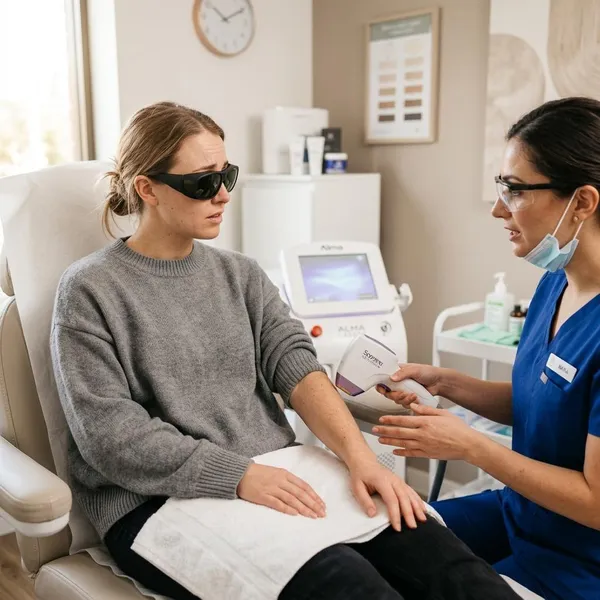
If you are wondering is permanent hair removal painful, expect discomfort rather than unbearable pain for most sessions. Laser usually feels like quick heat or a rubber-band snap, while electrolysis feels more like repeated tiny stings. The area treated, your skin sensitivity, and the provider's technique make a bigger difference than the treatment name alone.
Does permanent hair removal hurt?
Permanent hair removal can hurt a little, but the pain should feel controlled and short-lived. A first session often feels stronger because there is more active, coarse hair to treat. Later appointments may feel easier as the hair becomes finer and less dense.
The most useful way to think about it is this: laser tends to be faster and more "snappy," while electrolysis is slower and more repetitive. If you are nervous, ask for a patch test before booking a full area. That small test gives you a better idea of your own tolerance than reading someone else's pain rating.
Laser feels like brief snaps or heat
Laser hair removal usually feels like a quick flick, hot pinprick, or short burst of heat. The pulse is over fast, which is why many people find it easier than waxing, especially on larger areas such as legs or arms.
Device quality and cooling matter here. A clinic with good cooling may feel much more comfortable than one that relies only on speed. If the sensation feels sharp but settles immediately, that is different from pain that keeps building or leaves the skin feeling burned.
Electrolysis feels like repeated small stings
Electrolysis treats one follicle at a time, so the discomfort feels more like a series of tiny stings, zaps, or warm pricks. It can be manageable on small areas such as the upper lip, chin, or stray facial hairs, but it may feel tiring on dense or larger patches.
Discomfort varies from person to person
Your pain level may not match a friend's, even with the same treatment area. Dry skin, poor sleep, stress, recent sun exposure, strong skincare actives, or an irritated skin barrier can all make a session feel sharper.
Which areas hurt the most?
The most uncomfortable areas are usually the ones with thin skin, many nerve endings, or coarse dense hair. Bikini line, underarms, and the upper lip often feel stronger than legs or arms.
That does not mean those areas are a bad idea to treat. It just means they need better planning: shorter appointments, cooling, gentle aftercare, and realistic expectations. Treating underarms before a long sweaty gym session, for example, is very different from treating them on a quiet day when you can wear loose clothing and let the skin calm down.
Bikini line and underarms
The bikini line and underarms are often the most sensitive because the hair is coarse and the skin is delicate. Laser pulses may feel hotter here, and electrolysis stings can feel more noticeable.
- Plan for friction: loose clothing helps after bikini treatment.
- Skip deodorant if advised: underarms can sting if products are applied too soon.
- Consider shorter sessions: helpful if you are anxious or very sensitive.
This is a common choice for people who deal with shaving bumps or ingrown hairs, but comfort should not be ignored. If the area feels painfully hot rather than briefly sharp, say so during the appointment.
Upper lip and facial areas
The upper lip can feel surprisingly sharp because the area is small, delicate, and nerve-rich. Watery eyes during treatment are common and do not automatically mean something is wrong.
Facial sessions are usually short, which makes the intensity easier to tolerate. The bigger practical issue is timing: avoid booking facial treatment right before an event if you are worried about visible redness.
Legs and arms
Legs and arms are usually easier for most people, especially with laser, because the sensation is spread over a larger area and the treatment moves quickly. The first few lower-leg sessions can still feel stronger if the hair is thick, but they are often less intimidating than bikini or upper-lip treatments.
Electrolysis is a different story on large areas. Since each follicle is treated separately, the discomfort may not be intense at first but can become tiring simply because the session takes longer.
What affects how painful hair removal feels?
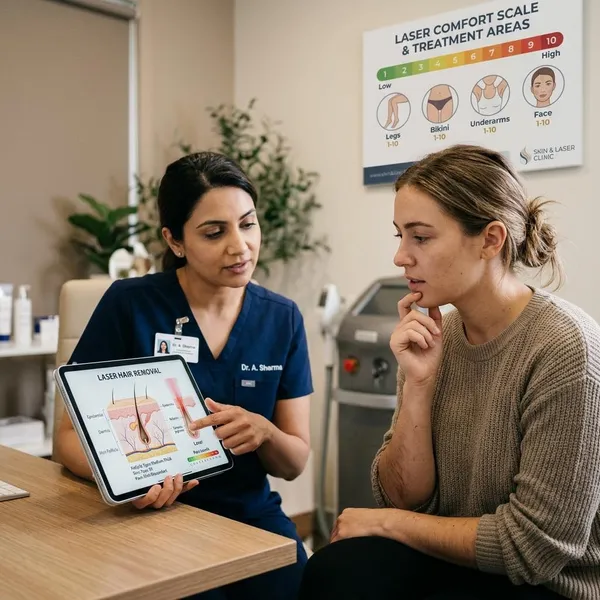
Pain during permanent hair removal is not random. The biggest factors are the area, hair thickness, skin condition, energy settings, cooling, and session length.
If you want the most practical order of checks, start with your skin condition first, then the treatment area, then the provider's comfort options. Sunburned, freshly exfoliated, or inflamed skin is more likely to react badly no matter how good the device is.
Treatment area
A laser pulse on the calf may feel mild, while the same sensation on the underarm can feel sharp. That difference is normal because nerve density, skin thickness, and hair texture change by body part.
Hair thickness and density
Thick, dark, dense hair often feels stronger because there is more target for laser energy, and more follicles to treat with electrolysis. This is one reason early sessions can feel more intense than later ones.
For someone treating hormonal chin hair or a dense bikini line, progress may feel slower and more uncomfortable at first. That does not automatically mean the treatment is going badly, but it does mean the provider should be adjusting the plan carefully.
Skin sensitivity
Sensitive or irritated skin can turn a normally tolerable session into a much sharper one. Recent sun exposure, razor burn, strong retinoids, acids, inflamed acne, or a damaged skin barrier are all reasons to be more cautious.
- Do not treat over sunburned skin.
- Tell the provider about reactive skin before starting.
- Pause harsh skincare if your clinic recommends it.
Energy settings and cooling
Higher settings can feel hotter, but stronger pain does not automatically mean a better result. The session should feel purposeful, not excessive. Good cooling, careful pacing, and clear communication are part of safe treatment, not optional extras.
If a provider dismisses pain that feels severe or refuses to adjust when your skin looks too reactive, that is a reason to stop and reassess.
Session length
Long sessions can feel worse even when each pulse or sting is mild. Repetition causes fatigue, especially with electrolysis or when multiple sensitive areas are treated on the same day.
A good plan for nervous beginners is to start with one area rather than booking everything at once. If a 10-minute upper-lip session already feels intense, a long bikini-and-underarm appointment may be too much for a first try.
How to make permanent hair removal less painful
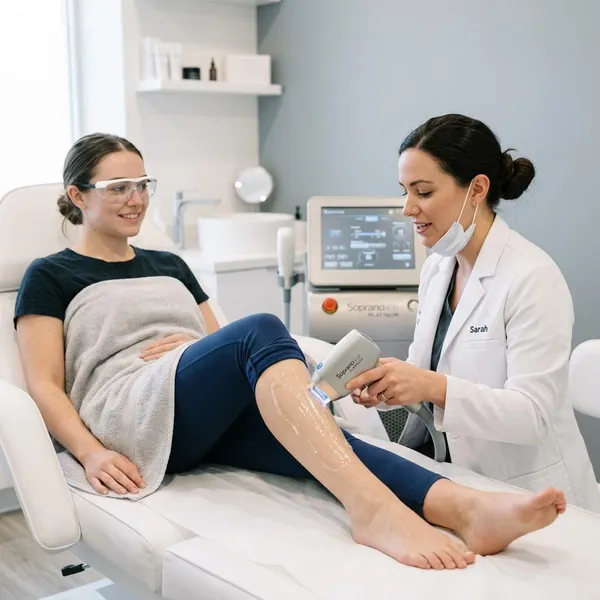
You cannot remove every sensation, but you can make treatment much easier to tolerate. The best approach is to arrive with calm skin, choose a provider who adjusts settings properly, and use comfort measures before the pain becomes a problem.
Think of comfort as part of the treatment plan. If sessions feel manageable, you are more likely to stay consistent, and consistency matters more than forcing yourself through an appointment that leaves you dreading the next one.
Choose an experienced provider
An experienced provider should ask about your skin, hair type, recent sun exposure, medications or skincare that may affect sensitivity, and previous reactions. They should also explain what normal discomfort feels like and what is not normal.
For darker skin tones, very sensitive skin, facial areas, or a history of pigmentation problems, experience matters even more. A careful patch test and conservative first session can prevent a painful mistake.
Use cooling during treatment
Cooling can make laser treatment feel less sharp and reduce lingering heat afterward. Cold air, chilled tips, cooling gel, or short pauses may be especially helpful on the bikini line, underarms, and upper lip.
Ask about numbing options
Numbing cream may help for small sensitive areas or longer electrolysis sessions, but use it only with the provider's instructions. The amount, timing, and treatment area matter.
Follow the recommended skin prep
Good prep usually means arriving with clean, calm skin and following the clinic's instructions about shaving, sun exposure, exfoliation, and active skincare. Do not wax or pluck before laser if your provider has told you the hair root needs to remain in place.
- Before treatment: avoid tanning and irritating products when instructed.
- On the day: keep the area clean and product-free unless told otherwise.
- After treatment: avoid heat, friction, and harsh skincare until the skin settles.
When pain after treatment is not normal
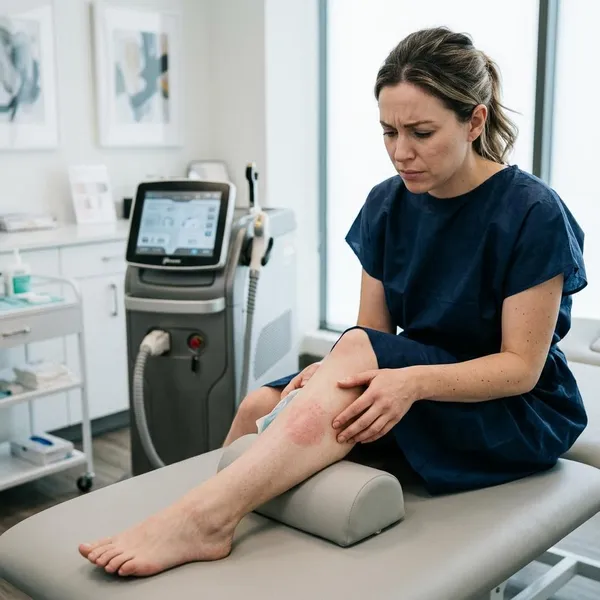
Mild redness, warmth, and tenderness can happen after laser hair removal or electrolysis. The key sign of normal recovery is that the skin gradually calms down.
Be more cautious if pain gets worse, the skin looks burned, swelling spreads, or irritation does not settle. That is especially important after facial treatment, treatment over recently tanned skin, or sessions where the area felt excessively hot during the appointment.
Severe or worsening pain
Pain that increases instead of fading is not a normal recovery pattern. Mild soreness should improve, not become more intense by the next day.
Contact the clinic promptly if pain interferes with sleep, movement, clothing, or normal daily activity. If symptoms seem serious or you cannot get clear guidance, seek medical advice.
Blisters or burns
Blisters, open skin, or a burn-like mark should be taken seriously. Stop using active skincare on the area, protect it from friction and sun, and contact the provider or a medical professional for advice.
Heavy swelling
Small bumps or mild follicle swelling can happen, but heavy swelling is different. If the area becomes tight, puffy, spreading, or very uncomfortable, it needs review.
Facial swelling deserves extra caution because even a small treated area can look dramatic. Take clear photos if you need to send them to the clinic for quick guidance.
Irritation that does not settle
Redness, itching, burning, or tenderness that lingers beyond the expected recovery window should not be ignored. It may be from friction, skincare used too soon, sun exposure, or settings that were too aggressive for your skin.
Do not book the next session while the area is still irritated. The skin needs to recover first, or the next appointment may be more painful and less safe.
Conclusion
Permanent hair removal is usually tolerable when the treatment is planned around your skin, hair, and most sensitive areas. Brief snapping, heat, or small stings can be normal; severe pain, burns, or symptoms that get worse are not. If you are unsure, start with a patch test or a small area rather than guessing your way through a full appointment.


