
IPL hair removal is safe for many at-home users, but only when your skin tone, hair color, and device are a good match. The first things to check are compatibility, recent tanning, irritated skin, and any medication that makes you more sensitive to light. If one of those is a problem, it is better to wait or choose another option than to push through and risk a burn or pigment mark.
What Are the Side Effects of IPL Hair Removal?
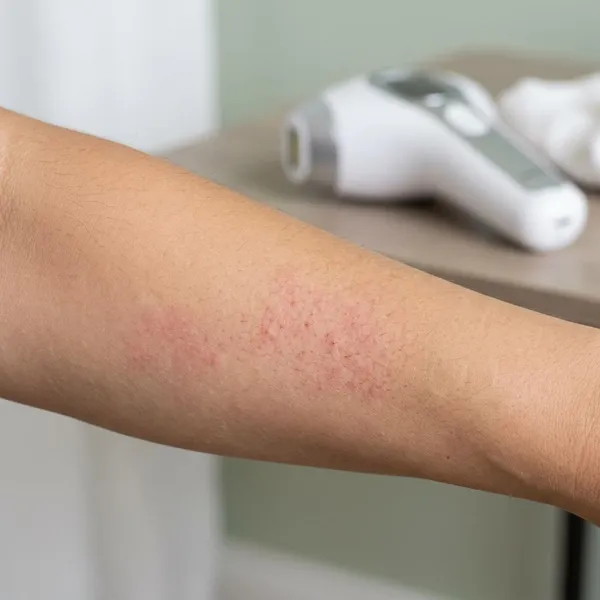
Most IPL hair removal side effects are short-lived: redness, warmth, and mild sensitivity are the usual ones. The more worrying reactions, such as burns, blisters, or skin color changes, are more often linked to a wrong setting, recent tanning, treating unsuitable skin, or flashing the same area too many times.
Temporary redness and warmth
Redness and warmth are common after IPL because the light energy turns into heat around the hair root. On areas like the legs, this may feel mild and fade quickly; on the underarms, bikini line, or upper lip, the same setting can feel more noticeable.
Cool the area gently if needed, avoid hot showers and friction for the rest of the day, and do not treat again while the skin still feels hot or sore.
Mild skin sensitivity
Sensitivity can show up as tightness, dryness, or a prickly feeling for a day or two. This is more likely if you treated over dry patches, shaving nicks, or skin that was already a little irritated.
- Keep aftercare plain: use a simple moisturizer and skip scrubs or strong active skincare.
- Protect exposed skin: use sunscreen on treated areas that will see daylight.
- Reduce friction: avoid tight clothing on freshly treated bikini lines, thighs, or underarms.
Burns or blisters from improper use
Burns and blisters are not normal IPL reactions. They can happen when the intensity is too high, the skin is recently tanned, the same patch is flashed repeatedly, or the device is used on an area the manual excludes.
If the skin feels sharply painful, looks raw, blisters, or swells significantly, stop using the device and let the area heal. Do not "finish the session" over damaged skin. For blisters, facial burns, or signs of infection, medical advice is the safer choice.
Temporary changes in skin color
IPL can temporarily darken or lighten patches of skin because both hair and skin contain melanin. This risk is higher with deeper skin tones, recent tanning, and settings that are too strong for the area.
Patch testing matters most when your skin tone is near the device's allowed limit, when you have been in the sun recently, or when you are treating a more visible area like the face or lower legs. If a patch test leaves unusual darkening, lightening, or prolonged redness, do not continue at that setting.
Who Should Avoid IPL Hair Removal?
Some people should avoid IPL or ask a clinician before using it. The main higher-risk groups are people whose skin or hair does not match the device, people with active skin problems in the treatment area, and people using medications or skincare that can increase light sensitivity.
People with incompatible skin or hair types
IPL usually works best when there is a clear contrast between darker hair and lighter-to-medium skin. Very blonde, gray, white, and red hair often respond poorly because there is not enough pigment in the hair for the light to target well.
Deeper skin tones need extra caution because the skin itself may absorb more light. Some newer devices support a broader tone range, but others do not. If your tone is outside the manufacturer's chart, do not test it on a large area just to see what happens.
People with active or irritated skin
Do not use IPL over sunburn, rashes, open cuts, infections, eczema flare-ups, psoriasis plaques, or severely inflamed acne. Heat from the device can turn a small irritation into a longer-lasting skin problem.
People taking photosensitizing medications
Medications and topical treatments that make skin more sensitive to light can make IPL riskier. This may include some acne treatments, antibiotics, antifungals, prescription creams, and certain other medicines, depending on the person and the dose.
- Ask before treating: check with a pharmacist, dermatologist, or prescriber if your medication mentions light sensitivity.
- Be careful with actives: retinoids, exfoliating acids, benzoyl peroxide, and strong brightening products can make skin more reactive around treatment days.
- Delay if unsure: waiting is better than guessing when your skin is already sensitized.
Which Skin and Hair Types Are Safest for IPL?
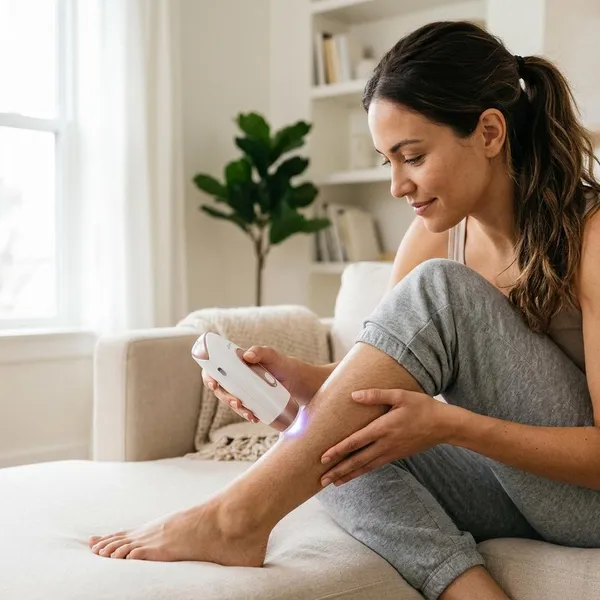
The safest at-home IPL match is usually dark hair with a skin tone that sits clearly inside the device's approved range. Safety becomes less straightforward when hair is very light, skin is deeper, or your skin tone has changed because of sun exposure.
Dark hair usually responds best
Brown and black hair usually respond best because they contain more melanin for IPL to target. That can make treatment more predictable, especially when the surrounding skin has less pigment than the hair.
Even with a good match, results are gradual. Treating more often than the schedule recommends is more likely to irritate your skin than speed up hair reduction.
Very light hair responds poorly
Very light blonde, gray, white, and many red hairs often do not absorb enough light for IPL to work well. The safety issue is not only weak results; it is the temptation to raise the intensity or repeat flashes because nothing seems to be happening.
If your hair is a poor match, IPL may not be worth the time, even if your skin can tolerate it. In that case, a professional consultation or another hair removal method may be more sensible.
Suitable skin tones depend on the device
Skin-tone suitability is device-specific. Some at-home IPL devices have sensors that prevent flashing on skin that is too dark for that model, while others rely more heavily on the user reading the chart correctly.
Check the chart in natural light and compare the actual area you want to treat, not just your general skin tone. Arms, legs, face, and bikini line can differ slightly, especially after sun exposure.
Recent tanning can increase skin risk
A recent tan increases melanin at the skin surface, so more light may be absorbed by the skin instead of the hair follicle. That makes burns and discoloration more likely, whether the tan came from sun, tanning beds, or visible self-tanner residue.
For summer use, build in pauses rather than trying to keep the same routine all season. Wait until the tan has faded, then patch test again before returning to a normal treatment schedule.
How to Use IPL Safely at Home
Safe at-home IPL comes down to a few boring but important habits: check compatibility, read the manual, patch test, use the right intensity, and follow the schedule. Most avoidable problems happen when someone rushes the process or treats IPL like a normal shaver instead of a light-based device.
If you are choosing between occasional touch-ups and long-term home treatment, be stricter with the long-term plan. Repeated small mistakes, such as using too much intensity or treating tanned skin, can add up over time.
Check skin and hair compatibility
Start with the manufacturer's skin-tone and hair-color chart. If your skin is outside the safe range or your hair color is listed as unlikely to work, stop there rather than trying to compensate with stronger settings.
Check the exact area too. Facial skin, bikini-line skin, and lower-leg skin may not all tolerate the same level, even on the same person.
Read the device safety instructions
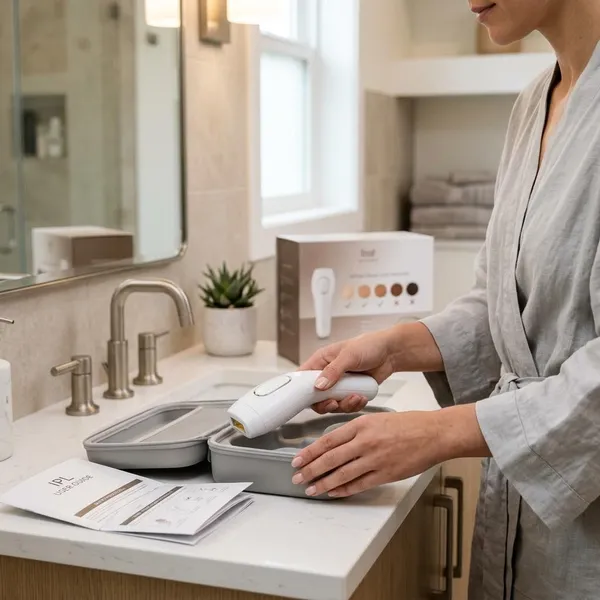
The manual tells you which body areas are allowed, which settings to use, how to protect your eyes, and when not to use the device. This matters because one model may allow facial use below the cheekbones, while another may have stricter limits.
Pay special attention to warnings for the face, bikini area, tattoos, moles, recent tanning, and medication use. Those are the places where casual guessing creates the most trouble.
Patch test before full treatment
Patch test the same area you plan to treat, then wait at least as long as the device recommends. A leg patch test does not prove your upper lip or bikini line will tolerate the same setting.
Continue only if the skin stays calm. Prolonged redness, swelling, blistering, sharp pain, or unusual pigment change means the setting or area is not suitable.
Use the recommended intensity
Use the device's recommended intensity rather than the highest level you can tolerate. More heat does not automatically mean better results, and discomfort is not proof that the treatment is working better.
- First session: start cautiously, especially on sensitive areas.
- New area: reassess the setting instead of copying what worked elsewhere.
- After sun exposure: pause, then patch test again when the skin has returned to its normal tone.
Follow the treatment schedule
Follow the schedule for your specific device. IPL works with hair growth cycles, so treating too frequently usually adds irritation rather than better results.
- Prepare the skin: shave if your device requires it, and treat clean, dry skin.
- Avoid removing the root: do not wax or tweeze before IPL, because the follicle needs to be present.
- Move methodically: keep the device flat and avoid repeated flashes on the same spot.
- Keep aftercare simple: avoid heat, scrubs, strong skincare, and direct sun on freshly treated skin.
Conclusion
IPL is a reasonable at-home option when your skin and hair match the device, your skin is calm, and you are willing to follow the limits instead of chasing faster results. If you are recently tanned, using light-sensitive medication, dealing with irritated skin, or sitting near the edge of the device's skin-tone range, waiting or getting professional advice is the smarter move.


