
If you are comparing IPL with electrolysis, the first split is simple: IPL is usually better for reducing dark hair over larger areas, while electrolysis is the stronger choice when you want permanent removal of specific treated hairs. Check your hair color, skin tone, and treatment area first, because those three things decide whether a method is likely to work well or waste your time.
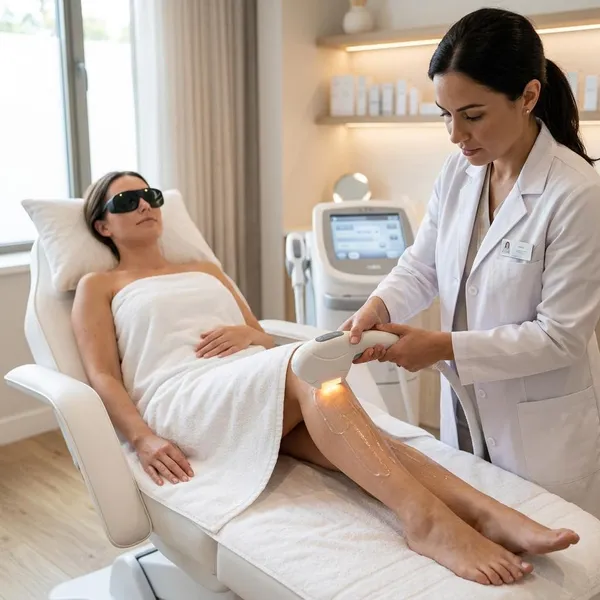
When IPL is the better choice
IPL is the more practical option when your goal is smoother skin with less regrowth, not necessarily the permanent removal of every single follicle. It uses light energy that targets pigment in the hair, so it performs best when the hair is visibly dark and the skin tone is compatible with the device or clinic settings.
You want to treat larger areas
IPL is usually the more realistic choice for legs, arms, chest, back, or stomach because each flash covers many follicles at once. Electrolysis treats hairs one by one, so using it for a full-leg area can become slow, expensive, and hard to maintain.
- Good IPL scenario: dark leg hair, compatible skin tone, and a goal of shaving less often.
- Poor electrolysis scenario: trying to clear a large area quickly on a limited budget.
- Best expectation: visible reduction and easier upkeep, not a guarantee that every hair is gone forever.
Your hair is dark and pigmented
Dark brown and black hair usually respond best to IPL because the light needs pigment to absorb energy and heat the follicle. Coarse dark hair often gives the clearest early improvement, especially on areas such as underarms or lower legs.
If the unwanted hair looks blonde, red, grey, or white in natural light, IPL is much less reliable. That is not a problem with your technique; it is a limitation of pigment-based treatment.
You prefer convenient at-home treatment
At-home IPL is appealing when regular clinic appointments would be hard to keep. It can fit around work, childcare, travel, or privacy concerns, but it only works well if you follow the schedule and stay within the device's approved skin tone and hair color range.
You are comfortable with maintenance
IPL fits people who are happy with long-term reduction plus occasional maintenance. For example, someone who wants smoother legs through summer may be perfectly satisfied with touch-ups, while someone trying to permanently remove a few chin hairs would probably find that same routine frustrating.
When electrolysis is the better choice
Electrolysis is the better match when permanence, precision, or light-colored hair matters more than speed. Instead of relying on hair pigment, it treats individual follicles directly, which makes it useful for hairs that IPL often struggles to affect.
The tradeoff is patience. Because each follicle is treated separately and hair grows in cycles, you normally need repeated sessions. For a small area that bothers you every day, that slower process can still be more worthwhile than repeatedly treating a larger patch with IPL.
You want permanent removal of treated hairs
Electrolysis is the method most closely associated with permanent hair removal because it targets the follicle itself rather than trying to weaken it through light absorption. When a follicle is successfully treated, that specific hair should not keep producing the same regrowth.
The important nuance is that "permanent" does not mean "finished in one visit." Some hairs are not in the right growth stage during a session, and new hormonal growth can also appear later, especially on the face. Plan for a course of appointments rather than a one-time fix.
Your hair is blonde, red, grey, or white
Electrolysis is usually the smarter use of money for blonde, red, grey, or white hair. IPL often cannot "see" these hairs well enough because they lack the dark pigment needed for reliable light absorption.
You are treating a small or precise area
Small visible areas are where electrolysis earns its place. Upper lip, chin, jawline, sideburns, around the nipples, and stray neck hairs often need accuracy more than speed.
For someone with five coarse chin hairs that come back every few weeks, treating the whole lower face with IPL may be excessive. Electrolysis lets a practitioner focus on the exact follicles that are causing the problem.
You want to target stubborn remaining hairs
Electrolysis can be a useful second step after IPL. Once IPL has reduced the bulk of dark hair, the remaining hairs are often lighter, finer, scattered, or more stubborn.
- Use IPL first when the area is broad and the hair is mostly dark.
- Use electrolysis after when only isolated resistant hairs are left.
- Avoid repeating IPL endlessly if the same few hairs keep returning with little change.
How hair and skin type affect your choice
Your hair and skin type should come before brand claims, price comparisons, or convenience. IPL needs enough contrast between the hair and surrounding skin to target the follicle safely. Electrolysis is less dependent on that contrast, which is why it covers a wider range of hair colors and skin tones.
- Look at the hair in natural light. Dark brown or black points toward IPL; pale or grey points toward electrolysis.
- Check skin compatibility. Do not assume every IPL device is suitable for every tone.
- Match the area size. Large dense areas favor IPL; small precise areas favor electrolysis.
- Decide your tolerance for upkeep. Reduction is different from permanent removal.

Dark hair is a better match for IPL
Dark hair is a better IPL match because it contains more melanin for the light to target. If your hair is dark, coarse, and your skin tone falls within the safe range for the device, IPL is often a practical first choice for broad reduction.
Light hair is better suited to electrolysis
Light hair is better suited to electrolysis because the treatment does not need dark pigment to work. This is especially relevant for pale facial hairs, grey hairs that appeared with age, or red hairs that did not respond well to light-based treatment.
Skin tone can limit IPL compatibility
Skin tone can limit IPL because melanin in the skin may also absorb light energy. If your tone is outside a device's recommended range, the risk of irritation, burns, or pigment changes can increase.
- Check the official skin tone chart before buying or using an at-home device.
- Use built-in skin sensors if the device has them, but do not treat them as a guarantee.
- Choose professional advice if your skin is easily irritated, recently tanned, or close to the edge of the compatibility range.
Which method is best for each treatment area?
The best method often changes by body area. Large areas reward speed, while small visible areas reward precision. Many people get the most sensible result by using IPL for bulk reduction and electrolysis only where permanence or detail really matters.
IPL for legs and larger body areas
IPL is usually the better option for legs and other larger body areas when the hair is dark enough. The main benefit is not perfection; it is reducing the amount of hair you have to shave, wax, or manage over time.
IPL for underarms and bikini line
Underarms and the bikini line can be good IPL areas because the hair is often coarse, dense, and pigmented. Sessions are also shorter than treating full legs, so consistency is easier for many people.
- Underarms: often a practical IPL area if skin tone and hair color match.
- Bikini line: start cautiously because the area can be more sensitive.
- Skip aggressive settings: discomfort is not a sign that the treatment is working better.
Electrolysis for facial and small areas
Electrolysis is often the better choice for the face because the area is visible, sensitive, and usually needs precise work. It is also more dependable for mixed hair colors, such as a few dark chin hairs beside lighter ones.
Electrolysis for isolated stubborn hairs
Electrolysis is the cleanup option when only a few hairs keep coming back. Instead of treating a whole area again with IPL, you can target the exact follicles that remain.
Conclusion
Choose IPL if you want convenient reduction across larger areas and your hair is dark enough for light-based treatment. Choose electrolysis if the hairs are light, facial, scattered, or you want permanent removal of treated follicles. The most practical plan is often not one method for everything, but the right method for the right area.


