
An ipl hair removal device with ice cooling tech is worth considering if heat or discomfort is the main reason you hesitate to use IPL at home. The cooling does not make the device stronger or guarantee better results, but it can make regular sessions easier to finish. Before buying, check skin-tone and hair-color compatibility first, then look at comfort features, intensity control, and whether the routine fits your life.
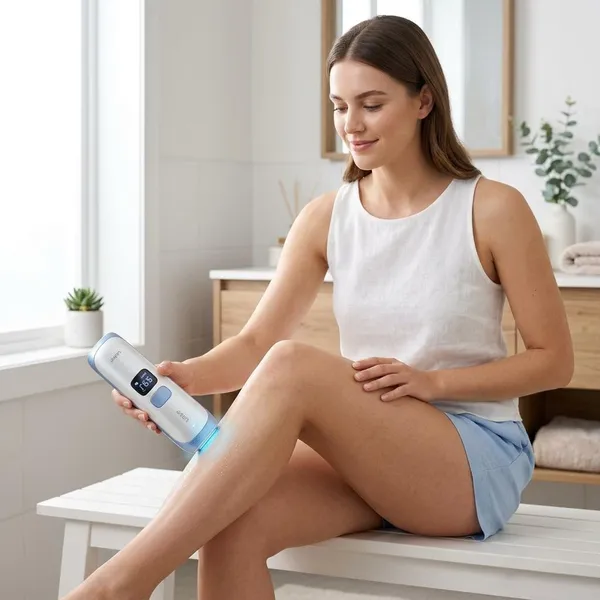
What Is an IPL Hair Removal Device With Ice Cooling?
An IPL device with ice cooling combines light pulses for hair reduction with a cooled contact surface that sits against the skin. The light is still doing the hair-reduction work; the cooling feature is mainly there to make each flash feel less hot.
The first thing to understand is that cooling is a comfort feature, not a shortcut. If the device does not suit your skin tone or hair color, cooling will not fix that. If it does suit you, the cooler treatment window may help you stay consistent enough to see gradual reduction.
IPL light targets pigment in the hair
IPL works by sending broad-spectrum light into the hair, where darker pigment absorbs the energy. That is why home IPL usually performs best on darker hair with lighter to medium skin tones. Very light blonde, gray, white, or red hair often responds poorly because there is not enough pigment for the light to target well.
Skin tone matters just as much. If the skin has a higher melanin level than the device is designed for, the light may be absorbed by the skin instead of mainly by the hair. Use the brand's skin and hair chart as a hard starting point, not as a loose suggestion.
Cooling helps reduce heat on the skin
The cooling plate helps lower the hot feeling on the surface of the skin while the IPL flash is delivered. It does not block the light from reaching the hair, but it can make the flash feel more like a warm snap than a sharp sting.
This is most useful on areas where discomfort tends to build, such as underarms, bikini edges, ankles, or the upper lip if facial use is allowed by the manufacturer.
Home IPL uses lower energy than salon laser
Home IPL devices are made for self-use, so they generally use lower energy than professional laser treatments. That can make them more convenient and less expensive over time, but it also means results are usually gradual rather than dramatic after one or two sessions.
If you want privacy, flexible timing, and maintenance at home, a home IPL device can make sense. If you want faster, more targeted treatment and are comfortable paying for clinic visits, professional laser may be the better comparison point.
Why Choose IPL With Ice Cooling?
The main reason to choose IPL with cooling is simple: you are more likely to keep using a device that feels manageable. Hair reduction at home depends on repeated sessions, so comfort can affect results indirectly by helping you stay on schedule.
It is especially useful if you plan to treat more than one area. A quick underarm touch-up is one thing; legs, bikini line, and underarms in the same week can feel like a bigger commitment if every flash feels too hot.
Less heat during treatment
Cooling reduces the heat you feel at the treatment window, which can make the session feel calmer and less intimidating. That matters because people often rush when a device feels too sharp, and rushing usually leads to missed patches.
- Good fit: you stop treatments because the heat puts you off.
- Less important: you already tolerate standard IPL comfortably.
- Not a fix: the device is unsuitable for your skin tone or hair color.
More comfort on sensitive areas
Underarms, upper lip, jawline, and bikini edges often feel stronger than lower legs because the skin is more sensitive or the hair is coarser. Cooling can soften that sensation, but it should not be treated as permission to use the highest setting straight away.
For a cautious first session, use a lower approved intensity on sensitive areas and increase only if your skin stays calm after the waiting period recommended in the manual.
Easier full-body sessions
Full-body use is where cooling can feel more practical than luxurious. A person treating only the underarms once a week may not care much, but someone doing legs, arms, underarms, and bikini line may notice heat building as the session goes on.
Better fit for first-time users
First-time users often worry less about the science and more about one question: "Is this going to hurt?" Cooling can make the first few sessions feel less stressful, which gives you more attention for the parts that really matter: flat skin contact, correct intensity, and steady coverage.
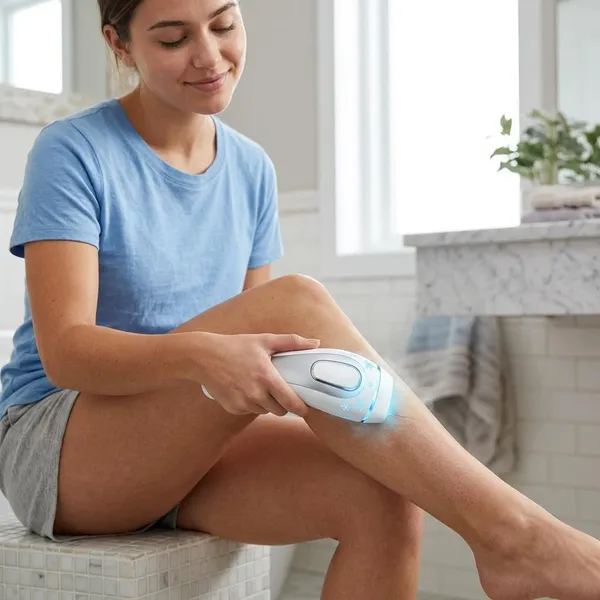
Does Ice Cooling Make IPL Less Painful?
Ice cooling usually makes IPL feel less painful, but it does not make treatment completely sensation-free. The cooling mainly reduces surface heat; the strength of the flash still depends on the intensity setting, body area, hair thickness, and your own sensitivity.
Cooling reduces the hot sensation
The clearest benefit is less surface warmth during each flash. On large areas, that can also reduce the tired, overheated feeling that sometimes appears after many repeated flashes.
Lower settings usually feel gentler
A lower intensity usually feels gentler, even on a device with cooling. Start with the setting recommended for your skin tone and treatment area, then adjust gradually if your skin responds well.
The most useful setting is not the strongest one you can tolerate once. It is the strongest comfortable setting you can repeat consistently without redness, burning, or hesitation before every session.
Sensitive areas may still feel stronger
Cooling helps, but the bikini line, upper lip, and underarms may still feel sharper than arms or legs. If an area feels too intense, pause, lower the setting, or split the treatment across different days instead of forcing a full session.
- Normal for many users: a brief warm snap that fades quickly.
- Be more careful: lingering redness, stinging, or swelling.
- Stop and check instructions: burning pain or a reaction that does not settle.
Comfort varies from person to person
Two people can use the same device at the same setting and describe it differently. Dry skin, recent sun exposure, hormonal changes, stress, and the exact body area can all change how IPL feels.
How to Use an IPL Device With Ice Cooling
Use the cooling feature as a comfort aid, not as a replacement for safe technique. The basic order is: confirm compatibility, shave, patch test, choose a suitable intensity, cover the area evenly, and repeat on the schedule in the manual.
If you are unsure where to be strict, be strict with compatibility and skin reaction. If those two are wrong, better technique will not make the session a good idea.
Shave before treatment
Shave the area before IPL so the light is not wasted on hair above the skin. Long surface hair can make flashes feel hotter and may leave a burnt-hair smell or extra irritation.
Check skin and hair compatibility
Check the device chart before the first session, especially if you have deeper skin, very light hair, red hair, gray hair, tattoos, heavy freckles, or recently tanned skin. These are not small details; they can decide whether IPL is suitable at all.
If the chart says a skin tone or hair color is not supported, do not rely on the cooling plate to make it safe or effective. Cooling changes comfort, not the way light interacts with pigment.
Choose the right intensity
Start with a patch test on the area you actually plan to treat. A level that feels fine on the lower leg may feel too strong on the bikini line or upper lip.
- Begin lower: first session, sensitive areas, or uncertain skin response.
- Increase gradually: only if the manual allows it and the skin stays calm.
- Reduce immediately: if you start rushing, flinching, or feeling lingering heat.
Cover the skin evenly
Even coverage prevents the patchy regrowth that makes home IPL frustrating. Work in rows or small zones rather than jumping around. On legs, for example, moving from ankle to knee in straight lines is easier to track than flashing random spots.
Use glide mode for broad areas if the device offers it, but switch to manual mode where precision matters. Around underarms, bikini edges, or face-approved areas, careful placement is usually better than speed.
Follow the recommended schedule
Follow the schedule from the manufacturer rather than treating whenever you remember. Many devices require regular early sessions before switching to maintenance, because hair grows in cycles and not every hair is ready to respond at the same time.
- Read the manual and patch test. Wait the full recommended time before treating a larger area.
- Shave and clean the skin. Avoid lotion, deodorant, self-tanner, or heavy skincare on the area.
- Select a suitable intensity. Choose by skin tone, body area, and patch-test response.
- Keep full contact. Place the window flat against the skin before flashing.
- Track sessions. Use a calendar reminder so early treatments are not skipped.
For occasional use before a single event, IPL may feel too slow to be satisfying. For year-round grooming or regular maintenance, the routine makes more sense because the benefits build gradually.
Conclusion
An IPL device with ice cooling is most worth it when comfort is the thing that will decide whether you keep using it. Check compatibility first, then choose a model that feels realistic for your routine and the areas you want to treat. If your skin and hair are suitable and you are willing to follow the schedule, cooling can make home IPL feel much easier to stick with.


