If you are searching for how to remove hair from back permanently, the honest answer is: electrolysis is the only method designed for permanent removal, while laser is usually the more practical way to reduce a full back. For a dense or wide area, the best plan is often not the "most permanent" method on paper, but the one you can actually finish without wasting time or money.
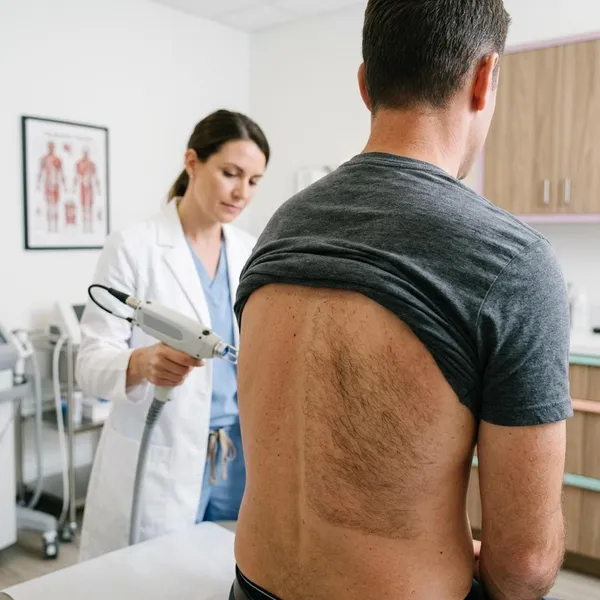
Can Back Hair Be Removed Permanently?
Back hair can be treated for lasting results, but the word "permanent" needs careful handling. Electrolysis is the professional method aimed at permanently disabling individual follicles. Laser hair removal can give major long-term reduction, but it does not usually promise that every treated follicle is gone forever.
The first thing to check is your real goal. If you want a completely smooth back with as little regrowth as possible, electrolysis matters more. If you mainly want less dense hair, easier grooming, fewer ingrown hairs, or a cleaner look during summer, laser may solve the problem with far less time in the treatment room.
Electrolysis is the only method designed for permanent hair removal
Electrolysis treats one follicle at a time with a fine probe and electrical current. Because it targets the follicle directly, it can work on dark, blond, gray, red, and white hairs, and it is not dependent on the contrast between hair color and skin tone.
The tradeoff is scale. A small shoulder patch, neckline area, or scattered leftover hairs can be realistic. A dense full back is a much bigger commitment because every follicle needs individual attention over repeated visits.
Laser provides long-term back hair reduction rather than guaranteed removal
Laser uses light energy to heat pigmented hair follicles, which is why it tends to work best on darker, coarser back hair. The usual result is thinner, slower, less noticeable regrowth rather than a guarantee that no hair will ever return.
Why large back areas require a practical treatment plan
A full back is not the same as treating a small patch of facial or neck hair. The area is large, hair density can be high, and hormones may keep some follicles active, especially around the upper back and shoulders.
- Start with area size: full back usually favors laser first; small patches may suit electrolysis.
- Check hair color: dark coarse hair is usually better for laser; light or gray hair points toward electrolysis.
- Decide your acceptable result: major thinning is different from near-total clearance.
- Plan for follow-through: missed sessions, sun exposure, and budget limits can change the result.
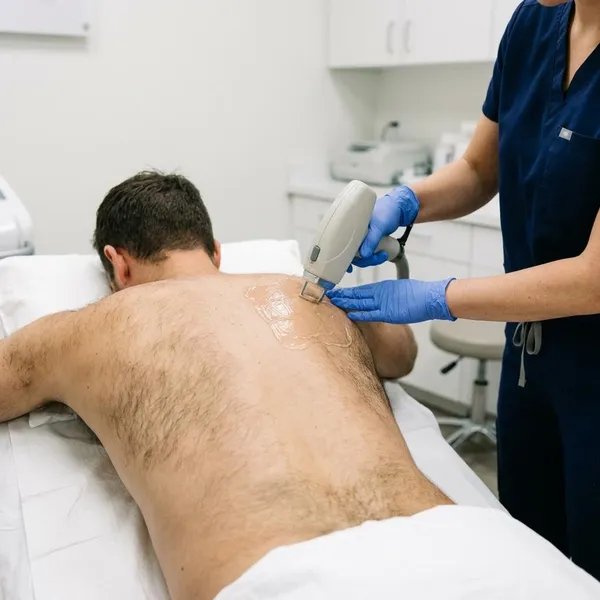
Laser Hair Removal for Back Hair
Laser is usually the first option worth considering for a broad, dense back because it can cover a large area quickly. It is not the strongest answer if your only goal is permanent removal of every follicle, but it is often the most realistic path to a smoother back with much less maintenance.
How laser targets thick back hair follicles
Laser devices target melanin in the hair shaft and follicle. Thick dark hairs absorb that energy more effectively, which can weaken the follicle and reduce future growth. The device type, skin tone, recent tanning, medications, and provider skill all matter, so a consultation or patch test is not just a formality.
Why laser is often the practical choice for large areas
Laser treats many follicles at once, which makes it much better suited to a full back than follicle-by-follicle work. If your main frustration is shaving, waxing, irritation, or visible hair at the beach or gym, laser can reduce the day-to-day burden even when it does not create perfect removal.
Sessions results and maintenance expectations
Many people need around 6 to 8 laser sessions for visible back hair reduction, though some need more. Sessions are often spaced several weeks apart because hair grows in cycles, and only some follicles are in the best stage for treatment at each visit.
| Stage | What to expect | What to decide |
|---|---|---|
| Before treatment | Skin and hair assessment, possible patch test, advice about tanning and shaving | Whether your hair color and skin tone make laser a sensible first step |
| Main series | Gradual thinning, slower regrowth, patchier density | Whether the reduction is matching your goal or needs adjustment |
| After the series | Possible touch-ups, especially on shoulders or upper back | Whether remaining hairs are acceptable or worth treating with electrolysis |
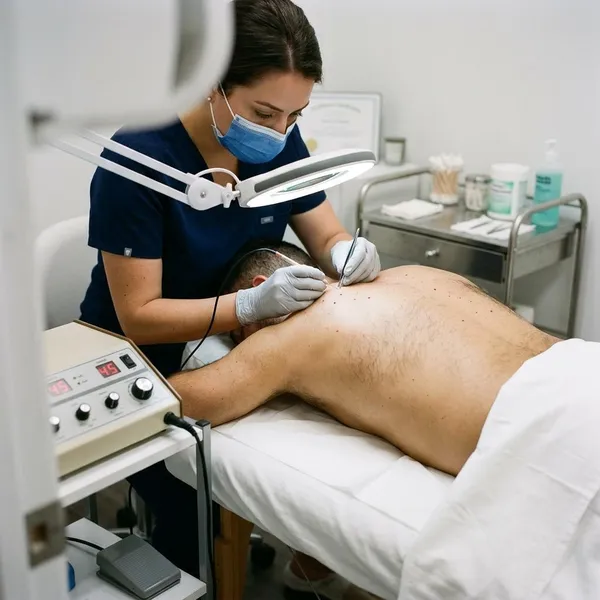
Electrolysis for Permanent Back Hair Removal
Electrolysis is the method to consider when permanence matters more than speed. It can treat hairs that laser may miss, including light, gray, red, or white hairs, and it can be useful when you want precise clearing in a smaller area.
The main issue is not whether electrolysis can work; it is whether using it across a large back is practical for your budget, schedule, and comfort level.
How electrolysis treats individual follicles
During electrolysis, a fine probe is inserted into the natural follicle opening and energy is applied to damage the growth center. The hair is then removed with tweezers. Because the follicle is treated directly, pigment is not the deciding factor.
Good technique matters. If you choose electrolysis, look for a qualified electrologist and ask how they estimate progress for body areas, not just small facial areas.
When electrolysis makes sense for back hair
Electrolysis makes the most sense for limited targets: a shoulder patch, a lower neck border, scattered hairs after laser, or lighter hairs that laser cannot treat well. It is less attractive as the first choice for a thick full back unless you are prepared for a long project.
Treatment time limitations for large areas
The limiting factor is total treatment hours. Session count can be misleading because one clinic may book short appointments and another may book longer blocks. Ask for an estimate in hours, likely timeline, and whether the provider thinks full clearance is realistic for your back density.
Comfort also adds up. A short electrolysis session on a small area may be manageable, while repeated work across a large back can feel tiring. If you already know you struggle to keep regular appointments, laser may be a more realistic first step even if electrolysis has the stronger permanence claim.
Laser vs Electrolysis for Back Hair
The simplest comparison is this: electrolysis is stronger for true permanent removal, while laser is stronger for speed and large-area reduction. For the back, that practical difference often matters more than the technical label.
| Decision point | Laser | Electrolysis |
|---|---|---|
| Best for | Large areas with dark, coarse hair | Small areas, light hairs, final cleanup |
| Result goal | Long-term reduction | Permanent follicle treatment |
| Speed | Much faster for a full back | Slow because each follicle is treated |
| Maintenance | Touch-ups may be needed | Less regrowth from successfully treated follicles |
Differences in permanence and expected results
Electrolysis is the better match if you want the strongest permanent-removal goal and are willing to trade speed for precision. Laser is the better match if you would be satisfied with a major reduction that makes the back easier to maintain.
Differences in speed coverage and comfort
Laser usually feels faster because each pulse treats multiple follicles, so appointments for a full back are more manageable. Electrolysis can feel more repetitive because each follicle is treated separately, which is why it is often better saved for smaller areas or stubborn leftovers.

Choosing the Best Back Hair Removal Method
The best method depends on three things: the hair you have, the result you want, and the commitment you can keep. Do not choose based only on the word "permanent" or on the lowest single-session price.
Choose electrolysis for the strongest permanent removal goal
Choose electrolysis when your priority is maximum permanence, especially for small areas or hairs that laser is unlikely to target. It is also a strong option after laser if only a few visible hairs remain and you want a cleaner final finish.
Choose laser for faster treatment across larger areas
Choose laser when the back area is broad, the hair is dark and coarse, and your goal is major thinning rather than guaranteed total removal. It is often the better starting point for someone who wants less grooming, fewer visible hairs, and faster progress across a large area.
Choose based on budget time and maintenance expectations
Compare full treatment plans, not single appointments. Ask each provider for the expected number of sessions, spacing, likely touch-ups, total cost range, and what happens if some areas respond poorly.
- If time is limited: laser is usually easier to fit around work, travel, and exercise.
- If hair is light or gray: electrolysis may be the more realistic option.
- If budget is tight: price the full series before starting, including possible maintenance.
- If you want the cleanest finish: consider laser for bulk reduction and electrolysis for final detail work.
Conclusion
For true permanent back hair removal, electrolysis has the strongest claim, but laser is often the smarter first move for a large, dense back. If you want fast visible reduction, start by asking whether your hair and skin are good laser candidates; if you want the most permanent finish on smaller areas or leftover hairs, electrolysis is where the plan becomes more precise.