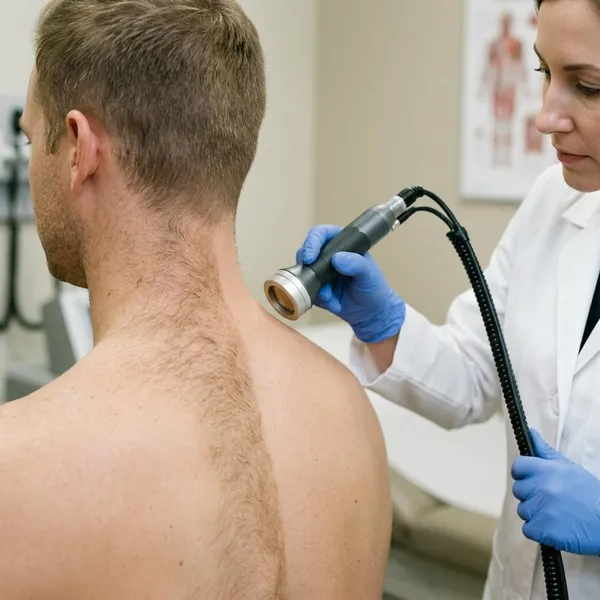
Permanent neck hair removal usually means electrolysis; laser can give strong long-term reduction, and IPL is more of a gradual maintenance option. The right choice depends less on the word "permanent" and more on the hair you are dealing with: a few coarse chin hairs, a wider patch on the back of the neck, light peach fuzz, or hormonally driven growth.
What can permanently remove neck hair?
The first thing to decide is whether you want true removal or simply less visible regrowth. Electrolysis is the strongest choice for permanent removal because it treats individual follicles. Laser is usually better when the area is larger and the hair is dark enough to respond. IPL can help some people reduce growth at home, but it should not be treated as a guaranteed permanent fix.
| Best fit | Method to consider first | Important limitation |
|---|---|---|
| Scattered coarse hairs | Electrolysis | Slower because each follicle is treated one by one |
| Larger dark-hair area | Laser | Usually reduction, not guaranteed full removal |
| At-home upkeep | IPL | Only suitable for approved areas and compatible skin/hair tones |
| Blond, red, gray, or white hair | Electrolysis | Light-based methods may not target it well |
Electrolysis for permanent removal
Electrolysis is the option to look at first if your goal is permanent neck hair removal. A trained electrologist treats each follicle with a fine probe and electrical current so the follicle can no longer grow hair once it has been fully treated.
Its big advantage is that it does not rely on hair pigment. That makes it useful for gray, blond, red, white, or mixed-color hairs that laser and IPL may miss. The trade-off is time: clearing a few chin or neck hairs is manageable, but a broad area may require patience and repeated appointments.
Laser for long-term reduction
Laser is often the better choice for a larger neck area with dark, coarse hair. It targets pigment in the hair and damages the follicle enough to reduce future growth, but it is more accurate to think of it as long-term reduction rather than guaranteed permanent removal.
IPL for gradual hair reduction
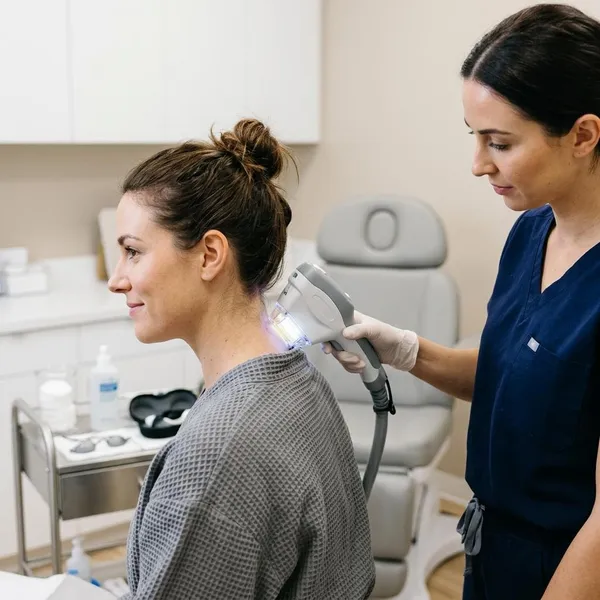
IPL uses broad-spectrum light to weaken hair growth over repeated sessions. At-home devices can be convenient, but they are generally less powerful than professional laser systems and results vary more.
IPL is best for someone who wants gradual improvement and accepts maintenance. It is not the best match if you want to permanently clear every coarse neck hair, especially if the hair is light, the skin tone is outside the device's approved range, or the area is not listed as safe to treat.
Can you use IPL on neck hair?
You may be able to use IPL on neck hair, but only after three checks: the device must approve that exact area, your skin and hair color must be compatible, and your skin must tolerate a patch test. The neck is not the place to "try it and see" at a high setting because irritation is visible and collars, sweat, shaving, and skincare can all make the area more reactive.
Think of IPL as a careful routine, not a quick fix. It works best when you shave first, treat clean dry skin, stay consistent, and stop if the skin reacts badly.
Check the approved treatment area
Start with the manual, not the mirror. Some IPL devices allow use below the cheekbones or under the chin, while others are meant only for body areas. The front of the neck, under-chin area, and back of the neck may not all be treated the same by the manufacturer.
- Approved: follow the suggested intensity and schedule.
- Not mentioned: contact the brand or avoid using it there.
- Clearly excluded: do not treat that area with the device.
Match your skin and hair tone
IPL needs enough contrast between the hair and surrounding skin. Dark hair on lighter skin usually responds best, while very light blond, red, gray, or white hair often responds poorly because there is not enough pigment for the light to target.
Skin tone is also a safety issue. If your skin tone is outside the device's chart, the risk of burns or discoloration can be higher. This is one of those checks where guessing is not worth it.
Patch test sensitive skin
A neck patch test is worth doing even if you have used IPL safely on your legs or underarms. Test a small area at the recommended setting and wait for the period stated by the device instructions. If you get lingering redness, swelling, stinging, or unusual tenderness, do not move on to a full neck session.
Expect reduction, not permanent removal
With IPL, a realistic win is slower regrowth, finer hair, and fewer shaving sessions. That can be enough if you are managing mild neck hair or want an at-home option between professional treatments.
If the hair is coarse, hormonally driven, or you want complete clearance, IPL is usually the weaker choice. In that situation, electrolysis or professional laser is more likely to match the goal.
Why does neck hair keep coming back?
Neck hair returns when the follicle is still active or when new follicles become stimulated over time. Temporary methods only remove the hair you can see. Even laser, which can reduce growth strongly, may not stop every follicle forever.
Hair grows in cycles
Not every neck hair is actively growing on the day you treat it. Some follicles are resting, some are shedding, and some are in the stage where laser or electrolysis can work more effectively. Multiple sessions are normal because each appointment catches a different group of hairs.
Hormones affect growth
Hormones can make neck hair darker, thicker, or more noticeable, especially around the chin, jawline, and upper neck. PCOS, menopause-related changes, genetics, some medications, and other hormone shifts can all play a role.
If coarse hair appears suddenly, spreads quickly, or comes with irregular periods, acne, or scalp hair thinning, it is sensible to ask a healthcare professional. Cosmetic treatment can remove existing hairs, but it may not stop new hormonally stimulated hairs from appearing.
Temporary methods leave follicles active
Shaving, trimming, depilatory creams, waxing, threading, and tweezing do not permanently disable the follicle. Shaving and creams remove hair at or near the surface; waxing and threading pull the hair out but leave the follicle able to grow again.
That does not make temporary methods useless. They are fine for quick grooming, especially between laser or IPL sessions, as long as you avoid root removal when your treatment plan depends on the follicle staying in place.
New coarse hairs can appear
A treated hair and a newly activated hair are not always the same thing. Someone may clear several coarse hairs with electrolysis and still notice new ones months later because other follicles have become active. This is common in hormonally sensitive areas, so occasional touch-ups are not automatically a sign that the earlier treatment failed.

What should you do between treatments?
Between treatments, your main job is to keep the skin calm and avoid habits that interfere with the next session. For laser and IPL, that usually means shaving or trimming instead of pulling hair from the root. For electrolysis, follow your provider's instructions because they may want enough visible growth to treat the follicle accurately.
Shave or trim when needed
Shaving or trimming is usually the safest way to manage visible neck hair between light-based sessions because it leaves the follicle in place. Use a clean razor or trimmer, avoid pressing hard, and keep passes minimal. If shaving gives you bumps, trimming may be the better everyday compromise.
Avoid pulling hair from the root
Waxing, threading, tweezing, sugaring, and epilating can interfere with laser or IPL because they remove the hair root that the light needs to target. This is especially tempting when one dark hair stands out under the chin, but clipping it short is usually a better choice during an active treatment plan.
Let irritated skin recover
Do not treat skin that is already hot, raw, swollen, or unusually tender. Pause strong acids, retinoids, fragranced products, and harsh scrubs until the area feels normal again. If you notice blistering, persistent pain, or marks that do not settle, get professional advice instead of trying to fix it with more products.
Follow treatment instructions
Session timing, sun precautions, shaving instructions, and aftercare are not small details. If you are doing professional treatments, ask exactly how they want the neck prepared before each appointment. If you are using IPL at home, stick to the device schedule rather than treating more often in the hope of faster results.
- Before treatment: check hair removal rules and avoid irritated skin.
- After treatment: reduce friction, heat, and harsh skincare.
- Between sessions: track reactions so you can adjust safely.
Conclusion
If you want the most permanent answer, start by asking whether the hair is small and scattered or broad and dense: electrolysis suits precise permanent removal, laser suits larger dark-hair areas where reduction is acceptable, and IPL suits careful at-home maintenance. The neck is visible and often sensitive, so the smartest plan is the one that matches your hair color, skin tone, treatment area, and likelihood of hormonal regrowth instead of chasing the fastest-looking option.