If your goal is to permanently remove belly hair, start with the method that actually affects the follicle. Electrolysis is the clearest option for permanent removal of treated hairs, while laser can give strong long-term reduction on dark stomach hair and home IPL is better viewed as maintenance or gradual reduction.

What works best for dark belly hair?
Dark belly hair is usually the easiest type to reduce because light-based treatments can target the pigment in the hair. If the hair is black or dark brown and clearly darker than your skin, laser is often the fastest way to make a visible difference across the stomach area.
The most practical plan is often staged: reduce the larger area first, then clean up the hairs that remain. Someone with a dark happy trail below the navel may get a lot of value from laser first. Someone with just a few scattered hairs may be better off going straight to electrolysis.
| Best fit | Method to consider | What to expect |
|---|---|---|
| Coarse dark hair over a larger patch | Laser | Faster long-term reduction, but not guaranteed complete removal |
| Moderate dark hair and home privacy matters | Ulike IPL | Gradual reduction with ongoing maintenance |
| Light, gray, red, fine, or leftover hairs | Electrolysis | Precise permanent treatment of individual follicles |
Laser for faster large-area reduction
Laser makes the most sense when the belly hair covers enough area that treating each follicle one by one would feel slow or expensive. It targets pigment in the hair and uses heat to damage follicles, so coarse dark hair usually responds better than pale fuzz.
Expect a series of sessions rather than one appointment. Many people need several treatments spaced weeks apart because hairs grow in cycles, and some maintenance may still be needed later. Avoid waxing before laser appointments unless your provider tells you otherwise, because the hair root usually needs to be present for the treatment to work well.
Ulike IPL for at-home reduction
Ulike IPL can be useful if you want to reduce belly hair at home and your hair and skin tone fit the device guidance. It is not the same as professional laser, and it should not be treated as a guaranteed permanent-removal method.
- Good use case: dark stomach hair, lighter surrounding skin, and enough patience for repeated sessions.
- Less ideal: blond, red, gray, or very fine hair, where light-based devices usually struggle.
- Main trade-off: more privacy and at-home convenience, but treatment requires a consistent, model-specific schedule and periodic touch-ups. Results vary by hair color, skin tone, treatment area, hormonal factors, and adherence to the routine.
Electrolysis for remaining hairs
Electrolysis is the method to look at when you want treated hairs permanently disabled, especially after laser has already reduced the main patch. A fine probe treats each follicle individually, so it can work on hair colors that laser and IPL may miss.
The downside is time. Electrolysis is practical for a small happy trail, scattered hairs around the navel, or stubborn leftovers after laser. For dense hair across a large stomach area, starting with laser first can be a more realistic route.
Can you permanently remove belly hair at home?
Fully permanent belly hair removal at home is unlikely. Home methods can make the area smooth, slow regrowth, or reduce visible hair over time, but they usually do not destroy follicles as reliably as professional electrolysis.
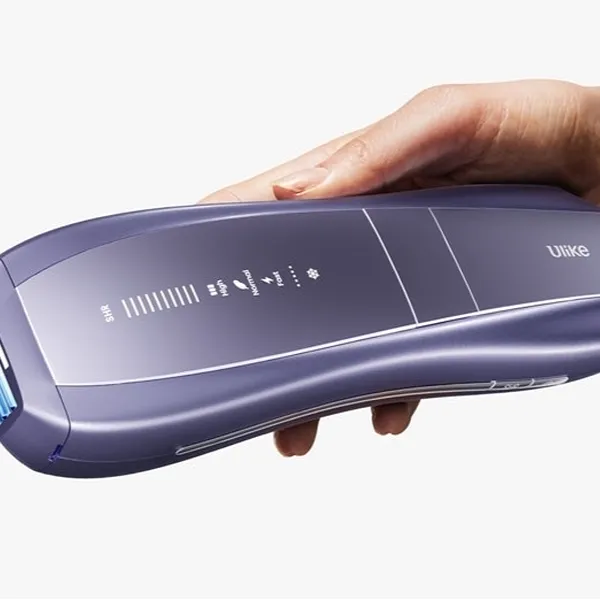
Home IPL reduces hair rather than removing it permanently
Home IPL weakens suitable hairs over repeated use, so regrowth may become slower, finer, or patchier. That can be a worthwhile result, but maintenance sessions are usually part of the deal.
Before using Ulike IPL on the stomach, confirm that your skin tone and hair color are compatible and complete the patch test required by the manual for your specific model. Treat only permitted abdominal skin, and do not flash directly over the navel, tattoos, dark moles, broken or sunburned skin, or any other prohibited area listed in the manual.
Shaving and creams only remove visible hair
Shaving cuts belly hair at the surface, while depilatory creams dissolve visible hair just above or slightly below the skin. Neither method changes the follicle, so regrowth is expected.
These options are best for short-term smoothing: a last-minute outfit, swimwear, a gym day, or a period when you do not want to commit to appointments. If creams sting, burn, or leave a rash, stop using them on that area rather than pushing through irritation.
Waxing removes hair temporarily from the root
Waxing and sugaring pull hair from the root, so the stomach can stay smooth longer than it does after shaving. The result is still temporary because the follicle remains alive.
- Useful for: vacations, special occasions, or a few weeks of smoother skin.
- Watch for: ingrown hairs, redness, and irritation around the navel area.
- Important if planning laser: ask when to stop waxing, because laser usually needs hair in the follicle.
Permanent removal usually requires professional electrolysis
If you want the strongest route to permanent removal, electrolysis is usually the professional option to compare everything else against. It treats individual follicles and is commonly recognized as suitable across hair colors and skin tones.
It is not the easiest option for every stomach area. A few stubborn hairs are manageable; a wide dense patch may require many sessions. That is why a common real-life strategy is laser for reduction first, then electrolysis for the hairs that still bother you.
Why does belly hair keep growing back?
Belly hair keeps returning because not every follicle is active at the same time, and most removal methods do not shut the follicle down. Hormones can also change the amount, thickness, and pattern of stomach hair over time.
Hair follicles grow in different cycles
Hair follicles move through different growth stages, and treatments do not catch every follicle at the perfect moment. That is why laser and electrolysis are scheduled as repeat treatments instead of one-and-done fixes.
Patchy regrowth between sessions is common on the stomach. The useful check is whether the hair is gradually becoming lighter, finer, or less dense over time, rather than whether every single hair disappears immediately.
Hormones can influence belly hair
Hormones can make belly hair darker or coarser, especially around puberty, pregnancy, perimenopause, or certain health changes. Do not use Ulike IPL during pregnancy or breastfeeding. Wait until after this period and follow the instructions for your specific model before restarting treatment.
If the change is sudden, heavy, or paired with irregular periods, acne, new facial hair, or scalp thinning, it is worth asking a healthcare professional about possible hormonal causes. Hair removal can manage the visible hair, but it will not address an underlying trigger.
Untreated follicles can produce new hair
Any follicle that has not been disabled can keep producing hair. This is why a belly area can look much better after laser but still have a few noticeable strands around the navel or lower stomach.
For a cleaner long-term result, do not keep repeating broad treatment for only a handful of hairs. At that point, targeted electrolysis may be more efficient.
New coarse hairs can appear over time
New coarse hairs can appear later even if older treated hairs were reduced well. The body can activate follicles that were previously quiet, especially when hormones shift.
Conclusion
The best choice depends on what bothers you most: a large area of dark belly hair usually points toward laser first, a few stubborn or light hairs point toward electrolysis, and at-home IPL is better for reduction than true permanence. Temporary methods still have their place, but if you want the longest-lasting result with the least ongoing upkeep, focus on follicle-level treatment rather than surface hair removal.