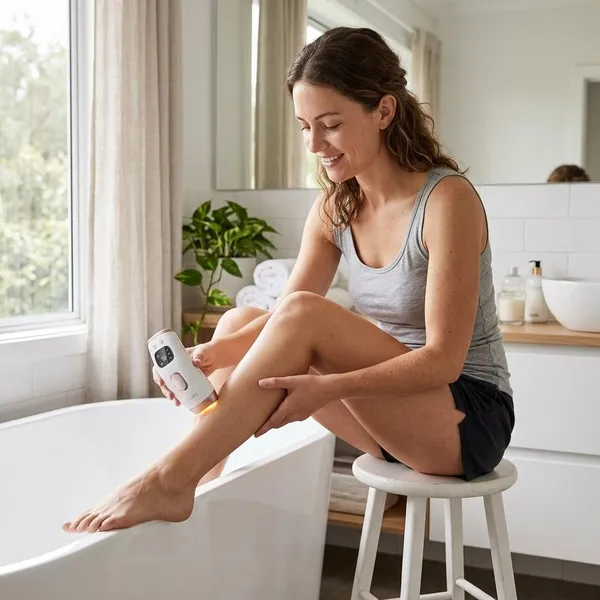
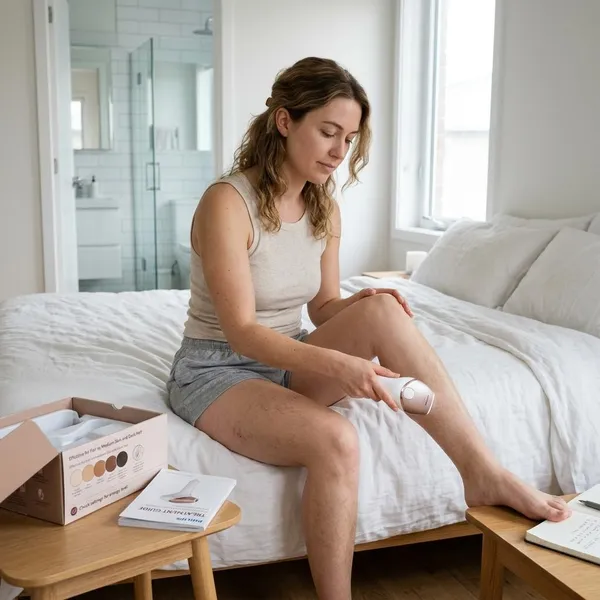
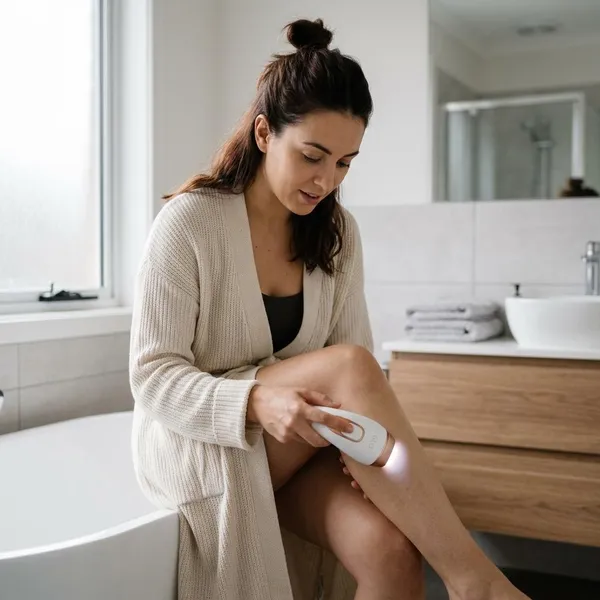
IPL results usually last for months after a full course, but they are best thought of as long-term hair reduction rather than a one-time permanent fix. If your hair and skin are a good match and you keep up with maintenance, regrowth is often slower, finer, and easier to manage than before.
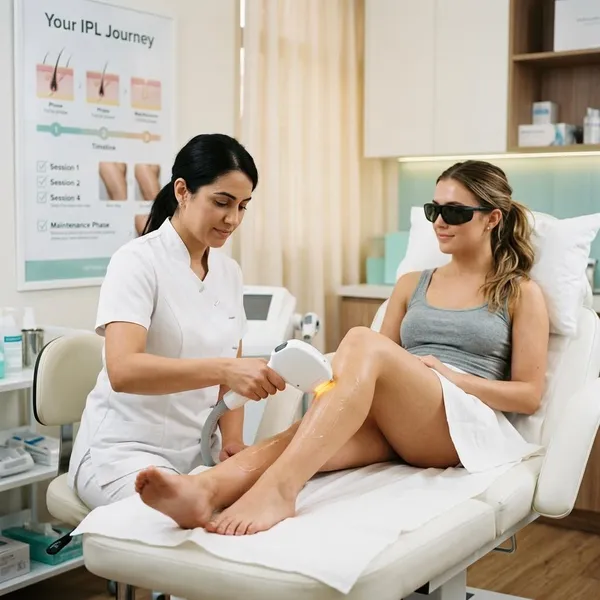
IPL Results Timeline From First Session to Maintenance
IPL works gradually because it targets hairs best when they are in the active growth phase. That is why one good session can make skin feel smoother for a short time, but it will not catch every follicle at once.
Early changes after the first few treatments
After the first few treatments, the earliest sign is often not bare skin but slower regrowth. Some hairs may shed over the next week or two, while other hairs keep appearing because they were not ready to respond during the last flash.
If you are treating legs for summer, this stage can feel encouraging because shaving may already last a little longer. If you are treating facial or chin hair, the change may be less neat at first because those areas are more likely to be affected by hormones.
When visible hair reduction usually appears
Many people start seeing clearer reduction after about 4 to 6 sessions, especially on dark, coarse hair. The treated area may look patchy, with fewer strong hairs and more fine regrowth.
When maintenance sessions become necessary
Maintenance becomes useful once the main area is clearly reduced and only scattered regrowth is coming back. For many home IPL users, that means a touch-up every 1 to 3 months; professional maintenance may be less frequent, often several months apart.
| Stage | What you may notice | What to do |
|---|---|---|
| First sessions | Shedding, slower regrowth, patchiness | Stay on the starter schedule |
| Visible reduction | Fewer thick hairs and longer smooth periods | Finish the full course, even if results look good |
| Maintenance | Small areas of returning hair | Touch up before dense regrowth returns |
Why Does IPL Hair Grow Back?
Hair can grow back after IPL because the treatment does not permanently disable every follicle. That does not mean it failed; good IPL results often mean less hair, slower regrowth, and easier upkeep rather than perfect permanent smoothness.
Hair growth cycles affect treatment timing
Hair grows in cycles, and IPL works best when the hair is actively connected to the follicle. Since only a portion of hairs are in that stage at one time, repeated sessions are needed to reach new groups of hairs as they become treatable.
Some follicles remain active after treatment
Some follicles are only weakened, especially if the hair is fine, light, deep-rooted, or missed during an ideal growth stage. These follicles may still produce hair, but it may come back softer and less noticeable.
- Normal outcome: fewer hairs and slower regrowth.
- Less ideal outcome: patchy reduction because sessions were skipped or settings were too low.
- Not a good sign: no change at all after a full, correctly followed course.
Hormones and body areas influence regrowth
Hormonal areas tend to be more stubborn. Chin, upper lip, neck, and lower abdomen hair may return sooner than underarm or lower-leg hair, even when the first results look promising.
This is where expectations matter. Someone treating dark underarm hair may only need occasional touch-ups after the starter course, while someone managing PCOS-related facial hair may need a more regular maintenance routine and should avoid expecting IPL to stop every new hair trigger.
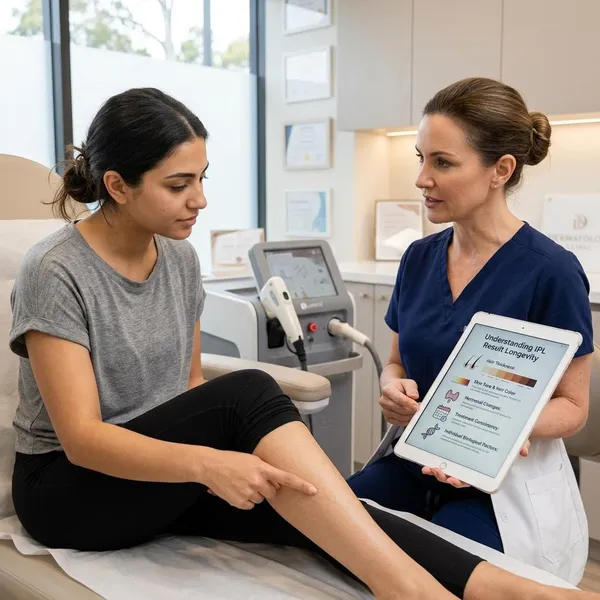
What Affects How Long IPL Results Last?
The first things to check are hair color, skin tone compatibility, and whether you can follow the schedule. These matter more than buying the most expensive device or using IPL more often than recommended.
Hair color thickness and growth patterns
IPL usually works best on darker hair because the light is attracted to pigment in the hair. Thick, dark underarm or bikini-line hair often responds better than blonde, red, gray, or very fine hair.
Growth pattern also changes the result. Stable body hair is usually easier to reduce than hair that keeps being stimulated by hormones. If the area has always grown back quickly after waxing or shaving, expect IPL maintenance to be more important there too.
Skin tone and device compatibility
Skin tone affects both safety and results because IPL also interacts with pigment in the skin. If your skin tone is not compatible with a specific home device, the treatment may be less effective or may increase the risk of irritation or discoloration.
Before starting, use the brand's skin-tone and hair-color chart, then test a small area as directed. If you have a deeper skin tone, recent tanning, pigmentation concerns, or a history of strong skin reactions, a professional consultation is the safer route than guessing with a home device.
Treatment consistency and device quality
Consistency is what turns early shedding into longer-lasting reduction. Skipping sessions during the starter phase leaves more follicles untreated, so the area may look as if it is "coming back" when it was never fully covered in the first place.
- Use the right setting: choose the highest comfortable level allowed for your skin tone, if the device instructions support it.
- Shave, do not wax: the hair root needs to be present for IPL to target it.
- Track each area separately: legs, underarms, bikini line, and face rarely progress at the same speed.
Hormonal factors and individual differences
Hormonal changes can shorten the smooth period after IPL. Pregnancy, menopause, thyroid changes, some medications, and conditions such as PCOS may encourage new or returning growth.
Individual response is also real. Two people can use the same device correctly and get different timelines, so judge progress by your own baseline: whether shaving is needed less often, whether regrowth is finer, and whether touch-ups are keeping the area under control.
How to Make IPL Results Last Longer
The best way to make IPL last longer is to treat it like a routine, not a quick fix. A suitable device, steady timing, and sensible skin care usually do more than extra flashing or rushing the schedule.
Follow the recommended treatment schedule
Follow the schedule from your device or clinic closely during the first course. Treating too rarely can miss active hairs, while treating too often may only irritate the skin without improving the result.
Maintain skin care and follow-up sessions
Good skin care helps you stay consistent. Shave before treatment, avoid using IPL on freshly tanned or irritated skin, and keep strong exfoliating acids or retinoids away from treatment days unless your provider says otherwise.
- For occasional smoothness: plan ahead, because IPL needs weeks of repeated sessions before a holiday or summer season.
- For year-round results: set maintenance reminders before hair becomes dense again.
- For sensitive skin: keep the setting conservative and prioritize skin comfort over speed.
- For stubborn facial hair: expect touch-ups to be part of the routine, not proof that the treatment failed.

Conclusion
IPL lasts longest when your hair and skin are a good match, you complete the full starter course, and you do maintenance before regrowth becomes heavy again. If you want a realistic goal, aim for easier, slower, finer regrowth rather than assuming every follicle will be gone forever.