
If you are wondering whether permanent hair removal can cause cancer, the reassuring answer is that laser hair removal, IPL, and electrolysis are not known to cause cancer when used appropriately. The bigger practical issue is not cancer risk, but whether your skin is suitable, whether the provider uses the right settings, and whether any unusual skin changes are checked before treatment.

What we know about laser and IPL cancer risk
Laser and IPL treatments use energy, so the word "radiation" can sound alarming. In this context, though, it does not mean the same thing as X-rays, CT scans, or nuclear radiation. Cosmetic hair removal devices are designed to heat hair follicles, not to send high-energy radiation deep into the body.
They use non-ionizing light
Laser hair removal uses focused light, while IPL uses broader pulses of light. Both are forms of non-ionizing radiation, which means they do not have enough energy to directly break DNA bonds in the way ionizing radiation can.
The treatment works because pigment in the hair absorbs light and turns it into heat. That heat damages the follicle enough to slow or reduce future growth. This is why dark, coarse hair often responds better than very light, red, gray, or white hair.
They do not work like ionizing radiation
Ionizing radiation, such as X-rays and gamma rays, can damage DNA directly at sufficient doses. Laser and IPL do not work that way. Their main biological effect is heat in targeted pigment, which is why burns and pigment changes are realistic risks, while cancer from the treatment itself is not a known outcome.
A useful boundary is to separate "safe treatment area" from "skin that needs a doctor first." Smooth, healthy skin with no unusual lesions is a very different situation from treating over a changing mole, a crusted patch, or a spot that bleeds. The second situation should be checked medically before any cosmetic treatment.
What side effects can hair removal cause?
For most people, the side effects worth paying attention to are skin reactions. Mild redness is common and usually short-lived. Burns, blisters, pigment changes, scarring, or infection are less common, but they matter more because they can take longer to settle.
Laser and IPL have more risk when the wrong settings are used on recently tanned skin or deeper skin tones without proper adjustment. Electrolysis avoids broad light exposure, but it can still cause irritation, tiny scabs, infection, or marks if the probe technique or aftercare is poor.
- Normal after a session: mild redness, warmth, follicle swelling, or tenderness that starts improving.
- Not something to ignore: blistering, worsening pain, spreading redness, pus, or skin that looks darker or lighter after healing.
- Higher-caution scenario: summer treatment on recently sun-exposed skin, especially if the area is already irritated or tanned.
- Lower-risk scenario: treatment on calm, untanned skin after a proper consultation and patch test.
Temporary redness and swelling
Some redness and slight swelling around the follicles is expected after laser or IPL. It can look a little like mild sunburn or small raised bumps around the treated hairs, especially on areas with coarse hair such as the underarms or bikini line.
Cooling the area, avoiding friction, and skipping hot showers or steam for a short period usually helps. Redness that keeps getting worse instead of fading is a reason to contact the clinic or a medical professional.
Skin irritation and sensitivity
Sensitivity can happen after laser, IPL, or electrolysis. The skin may feel warm, tight, itchy, or mildly sore, particularly on the upper lip, neck, bikini line, or anywhere the skin barrier was already stressed.
Burns or pigment changes
Burns and pigment changes are the side effects to take most seriously. They are more likely when treatment is done over tanned skin, when settings are too aggressive, or when the device is not suitable for the person's skin tone and hair color.
Hyperpigmentation means darker patches; hypopigmentation means lighter patches. Either can be upsetting and may take time to improve. If your skin tans easily, marks easily, or has reacted badly to heat-based treatments before, a patch test is not just a formality.
Rare scarring or infection
Scarring and infection are uncommon, but they become more likely after blisters, open skin, picking, or poor hygiene. Electrolysis can leave tiny crusts at treated follicles; those should be left alone rather than scratched off.
Get medical advice if you notice spreading redness, increasing warmth, pus, a bad smell, fever, or pain that is getting worse. Those signs go beyond a normal post-treatment reaction.

When to get medical advice before treatment
Most healthy people can start with a consultation at a reputable clinic, but some situations deserve medical advice first. The main reason is not that hair removal is expected to cause cancer; it is that cosmetic treatment should not cover up, irritate, or delay diagnosis of a skin problem.
Check the exact area you want treated before booking. Good light and a mirror are enough for a first look. If anything is changing, broken, inflamed, infected, or unexplained, deal with that before scheduling a cosmetic session.
You have suspicious moles or skin changes
A mole or patch that is changing in size, shape, color, border, texture, or symptoms should be checked by a doctor before treatment. The same applies to spots that bleed, crust, itch persistently, or do not heal.
For example, wanting hair removal on the face or chest is reasonable, but treating straight over a changing mole in that area is not. A provider should avoid it, and you should not feel awkward about asking for it to be skipped or assessed first.
You have an active skin condition
Active eczema, psoriasis, dermatitis, acne flares, folliculitis, cuts, cold sores, fungal infection, or severe razor burn can make treatment more painful and healing less predictable.
Sometimes the safest plan is simply to wait until the skin is calm. That matters more for sensitive or visible areas, such as the face, neck, and bikini line, where irritation can be harder to hide and easier to aggravate.
You take medicines that affect skin sensitivity
Medication history should be part of the consultation. Some prescriptions and skin products can increase photosensitivity, dryness, irritation, bruising, or delayed healing.
- Mention recent and current use: antibiotics, acne medicines, retinoids, strong exfoliants, and any treatment that has made your skin reactive before.
- Do not guess on timing: if the medicine was prescribed, ask the prescriber or clinic how long you should wait.
- Bring a list: it is easier than trying to remember names during a rushed appointment.
You have reacted badly to treatment before
A previous bad reaction changes the plan. Blistering, severe swelling, prolonged redness, infection, or lasting pigment marks are all worth mentioning before another session, even if the skin eventually healed.
That does not automatically mean you can never have treatment again. It may mean using a different device, lower settings, a longer break after sun exposure, electrolysis instead of light-based treatment, or a small patch test before committing to a full area.
How to make hair removal safer
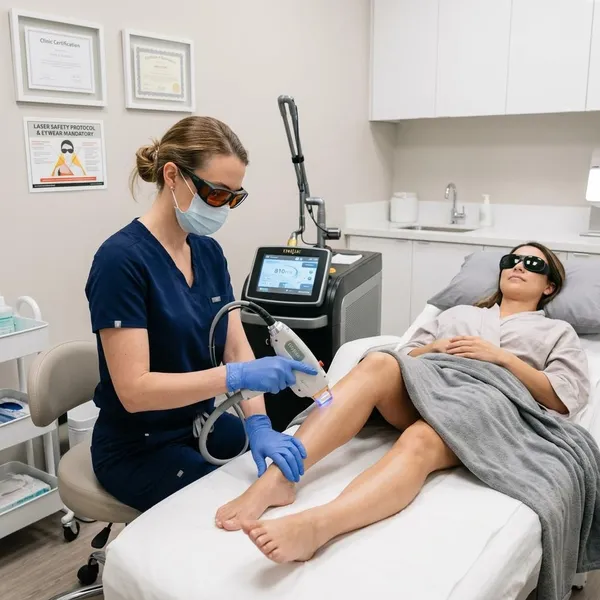
The safest approach is to treat hair removal like a skin procedure, not like a quick beauty add-on. Your first priorities are simple: choose someone qualified, make sure your skin and hair are suitable, test a small area when needed, protect your eyes, and follow aftercare even if the skin looks fine at first.
Choose a qualified provider
A good provider should ask about skin tone, hair color, tanning, medications, moles, skin conditions, and previous reactions before treating you. If the appointment goes straight from payment to treatment with almost no questions, that is a warning sign.
Also listen to how they describe results. Laser and IPL usually mean long-term hair reduction, not guaranteed removal of every hair forever. Electrolysis can be more permanent follicle by follicle, but it takes time and careful technique.
Check your skin and hair suitability
Suitability affects both results and side effects. Dark, coarse hair often responds well to laser because it contains more pigment. Very light blond, red, gray, or white hair may respond poorly to laser or IPL, making electrolysis a more realistic option.
Skin tone matters too. Deeper skin can often be treated safely with appropriate technology and settings, but it should not be treated casually. Ask what device will be used, why it suits your skin, and what the provider does to reduce burn or pigment risk.
Patch test before full treatment
A patch test is a small safety check before treating a larger area. It is especially useful if you have sensitive skin, deeper skin, a history of pigmentation, a new medication, or you are trying a clinic for the first time.
Do not rush the waiting period after the patch test. Delayed redness, blistering, or pigment change may not show immediately, and that delayed response is exactly what the test is meant to catch.
Follow proper eye protection
Eye protection is non-negotiable for laser and IPL. Both you and the provider should use protective eyewear that matches the device being used, especially during facial treatments.
If eyewear is missing, loose, or treated as optional, do not continue with the session. That is one of the clearest signs that basic safety standards are not being taken seriously.
Follow the recommended aftercare
Aftercare is mostly about not irritating skin while it settles. For the first day or two, avoid heat, hot baths, intense workouts, direct sun, fragranced products, exfoliating acids, retinoids, scratching, and rubbing unless your provider gives different instructions.
For exposed areas, sun protection is particularly important because recently treated skin can be more prone to dark marks after UV exposure. If the clinic gives vague aftercare, ask for written instructions before you leave.
Conclusion
Permanent hair removal is not known to cause cancer when laser, IPL, or electrolysis is used properly, but that does not make every appointment automatically low risk. Check your skin first, avoid treatment over anything suspicious or inflamed, and choose a provider who takes suitability, patch testing, eye protection, and aftercare seriously. If something on your skin looks unusual, get that answered before thinking about hair removal.


