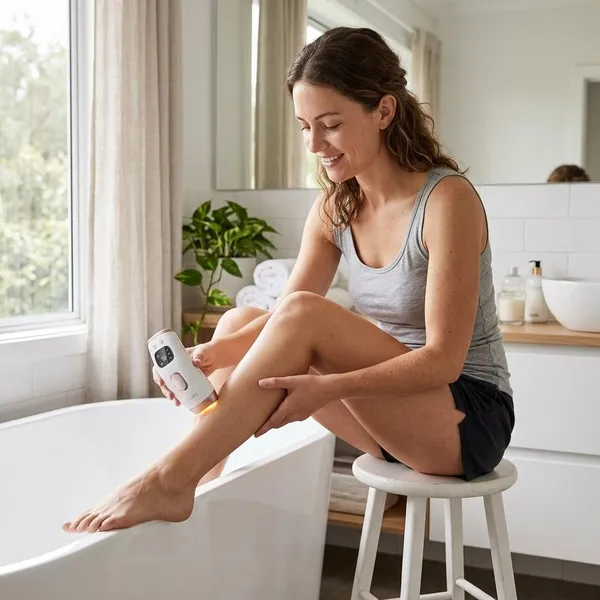
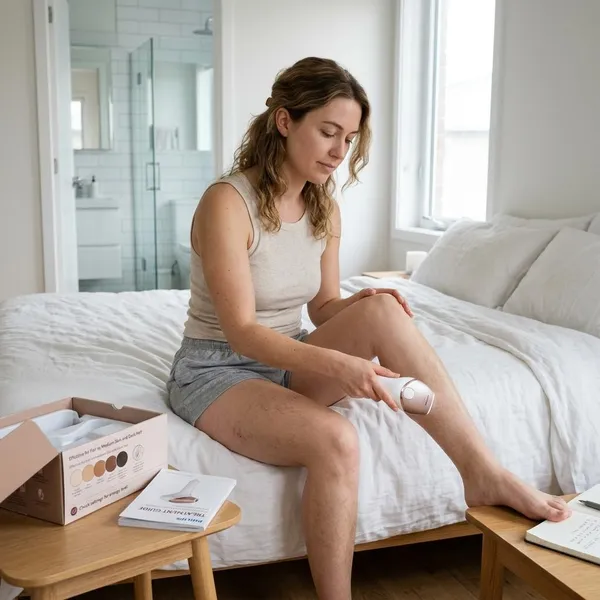
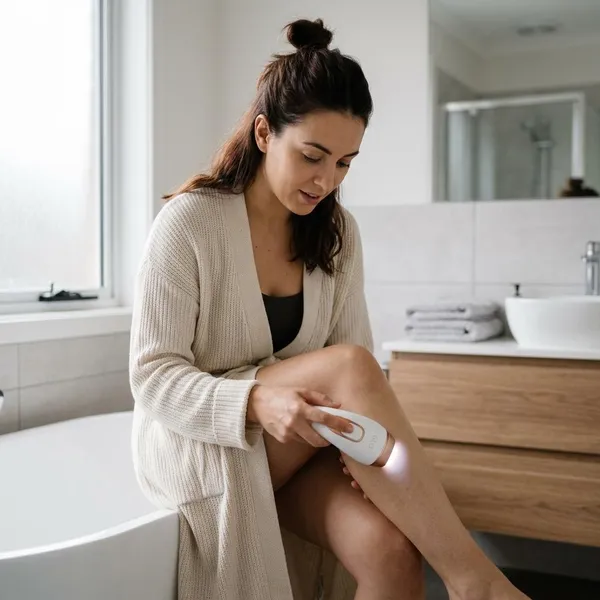
At-home laser hair removal usually does not work permanently in the strict sense. For most people, the realistic result is long-term hair reduction: slower regrowth, finer hair, and fewer shaving sessions, as long as the device suits your hair and skin and you keep up with maintenance.
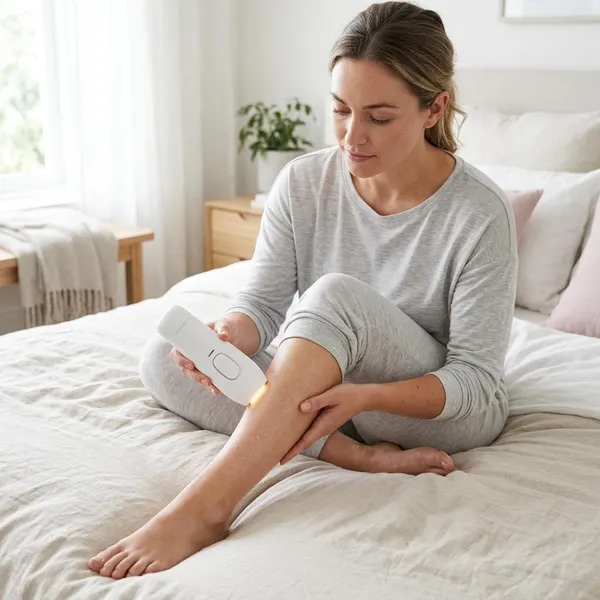
How Does At Home Laser Hair Removal Work?
Home hair removal devices use light energy to target pigment in the hair. That light turns into heat, and the heat can weaken follicles that are actively growing hair. The aim is not to pull hair out immediately, but to make future growth less dense and less noticeable over repeated sessions.
The most important thing to understand is the limit: home devices use lower energy than clinic machines. That makes them more suitable for consumer use, but it also means they are usually better for reduction than complete removal.
How IPL and home laser technologies target hair pigment
IPL and true laser devices both rely on contrast between the hair and the surrounding skin. Dark hair absorbs more light because it contains more melanin, which is why dark brown or black hair usually responds better than blonde, red, gray, or white hair.
IPL uses a broad range of light, while a true laser uses a more focused wavelength. Many "home laser" products are actually IPL devices, so it is worth checking the technology before you buy. The practical question is less about the label and more about whether the device is approved for your skin tone and hair color.
How heat affects active hair follicles
When the heat reaches a responsive follicle, it can interrupt the follicle's ability to keep producing thick visible hair. In real use, that often shows up as patchier growth, softer stubble, or longer gaps between shaving rather than a perfectly bare area.
Why hair growth cycles require repeated treatments
Light-based treatment works best when hair is in the active growth phase, but not every hair reaches that phase at the same time. One session can only affect some follicles, so repeated use is part of the process, not an optional extra.
- Shave first: the light needs to focus below the skin, not burn long surface hair.
- Patch test: try a small area before treating a full leg, bikini line, or face.
- Follow the device schedule: skipping sessions is one of the fastest ways to get weak results.
- Plan for maintenance: occasional touch-ups are usually needed once the initial phase is over.
What Results Can You Expect From At Home Devices?
Expect gradual improvement, not a one-time permanent fix. A good result may mean you shave less often, stubble feels softer, and treated areas look less shadowy or dense. For someone who normally shaves underarms every day, even stretching that to every few days can feel like a meaningful change.
When visible hair reduction usually begins
Visible change usually starts after several consistent sessions. Early signs are often small: hair takes longer to come back after shaving, a few patches look thinner, or the area feels less prickly.
How regrowth changes after consistent treatments
With steady use, regrowth often becomes finer, lighter-looking, and less dense. Underarms may feel smoother for longer, while the bikini line may become less coarse and less irritating during regrowth.
The best sign is not always "no hair." A more realistic win is needing fewer razor passes, seeing less dark shadow, or dealing with fewer sharp hairs after shaving.
How long results may last after stopping treatments
Results can fade after you stop. Some people keep noticeably reduced growth for a while, while others see hair return sooner, especially in hormonal areas or places that were treated inconsistently.
- Best case: hair stays thinner and slower for months, with only light touch-ups needed.
- Common case: growth returns gradually, but not always as thick as before right away.
- Weak case: results fade quickly because the device was a poor match or sessions were too irregular.
What Affects At Home Hair Removal Results?
The biggest factors are hair pigment, skin tone, treatment area, and consistency. If the device cannot clearly target the hair without heating the skin too much, results will be limited and irritation risk can rise.
Hair color and thickness
Dark, coarse hair usually responds best because it gives the light more pigment to target. Thick underarm or bikini-line hair often shows clearer improvement than very fine arm hair.
Very light hair is the main limitation. Blonde, red, gray, and white hairs often do not absorb enough light for strong results. If most of the hair in the area is light, a home device may not be worth the cost.
Skin tone and device compatibility
Skin tone affects both safety and performance. If the skin absorbs too much light, treatment may be less effective and more irritating. Many home devices are designed mainly for lighter to medium skin tones with dark hair, though some models support a wider range.
Check the device's skin tone chart, use any built-in skin sensor correctly, and avoid treating recently tanned or irritated skin. If you have deeper skin, frequent hyperpigmentation, or a history of strong reactions, professional advice is the safer starting point.
Treatment area and consistency of use
Small areas are easier to treat well. Underarms can take only a few minutes, so people are more likely to finish the full schedule. Full legs, chest, or back can become tedious with a small handheld window, which leads to missed patches and uneven results.
Who Gets the Best Results From At Home Hair Removal?
The best results usually come from the right match: dark hair, compatible skin tone, realistic expectations, and steady use. Home treatment suits people who want less maintenance, not people who expect every follicle to disappear forever.
It also suits low-risk, easy-to-repeat routines. Treating underarms every week is very different from trying to cover a full back by yourself or treating facial hair that may be hormonally driven.
Users with suitable hair and skin combinations
Strong candidates usually have dark brown or black hair and a skin tone that falls clearly within the device's approved range. That contrast helps the light focus on the hair rather than the surrounding skin.
- Good fit: dark underarm hair, compatible skin tone, and a willingness to do maintenance.
- Uncertain fit: medium skin tone, sensitive skin, or mixed hair colors in the same area.
- Poor fit: mostly gray, white, red, or very pale blonde hair.
Areas that usually respond better to treatment
Underarms and the bikini line often respond well because the hair is commonly darker and coarser, and the area is small enough to treat consistently. Lower legs can also improve, but they require more time and patience.
Facial use needs more caution. Some devices allow upper lip or chin treatment, but the area near the eyes should be avoided, and hormonal regrowth can make results less stable. If facial hair is sudden, heavy, or changing quickly, it is better to look into the cause rather than only treating the symptom.
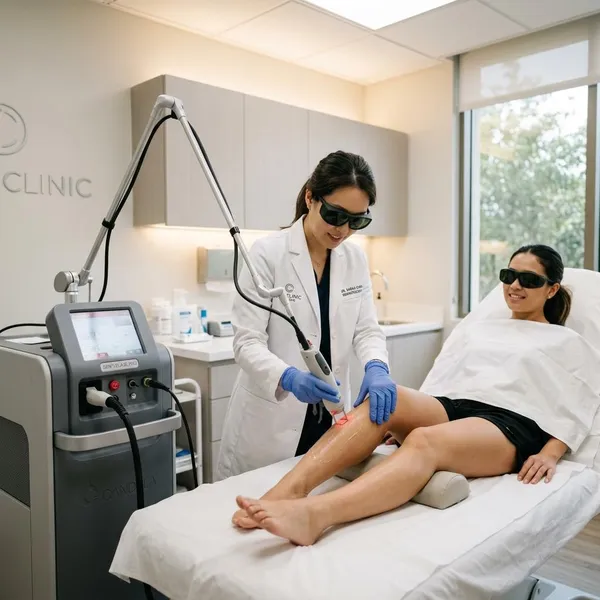
When Professional Laser Hair Removal May Be Better
Professional treatment may be the better choice when you want stronger reduction, have a difficult treatment area, or do not fit the ideal range for a home device. Clinic systems can use more advanced settings and are handled by trained providers, which can matter for both results and safety.
The trade-off is cost and scheduling. Home treatment is convenient and private, but professional treatment may save time if the area is large or the hair pattern has not responded well at home.
When stronger results are needed
Choose professional treatment if you have used a home device correctly for months and still see little change. At that point, the problem may be device strength or suitability rather than your effort.
When treating difficult hair patterns or larger areas
Large areas such as full legs, back, chest, or shoulders are often easier in a clinic because coverage is faster and more even. A home device can work, but the time commitment is where many people lose consistency.
- Go professional sooner if your skin tone is outside the device's safe range.
- Consider a clinic if facial hair is hormonal, dense, or keeps spreading.
- Upgrade from home use if repeated sessions have produced almost no visible reduction.
- Use home treatment for maintenance only if your provider says it is appropriate for your skin and treatment plan.
Conclusion
At-home devices can be worthwhile if you want easier upkeep and are a good match for the technology, but they are not the best choice for guaranteed permanent removal. Check hair color, skin tone, and the time you can realistically commit before buying; if any of those are a poor fit, professional treatment or another method may save you frustration.