
If you want the best laser for facial hair removal, start with your skin tone and hair color before looking at brands. For at-home use, Ulike Air 10 is the easiest IPL pick for many people because it is comfortable on small facial areas, while Tria 4X is the better-known true laser option. For darker skin, coarse chin hair, or hormonal growth, a professional consultation is often the safer and more effective route.
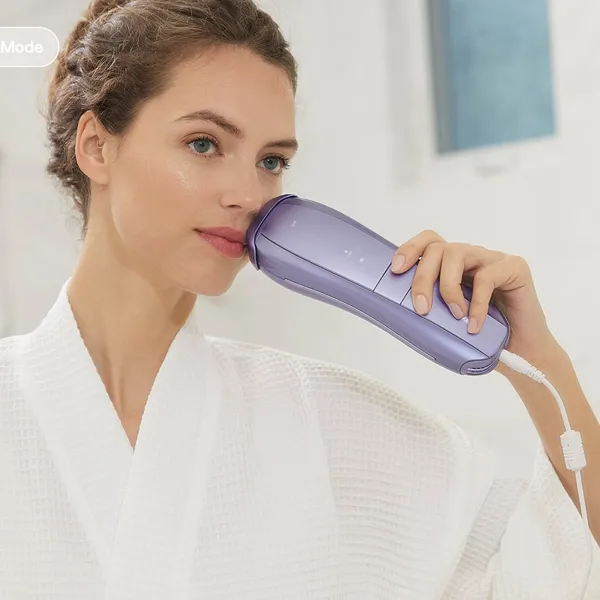
Best at-home devices for facial hair removal
At-home devices are best when you want gradual reduction, easy maintenance, and short sessions you can actually repeat. They are not the right choice for every face, though. If your hair is very light, your skin tone is outside the device's safe range, or your facial hair is suddenly getting thicker, it is better to pause and get professional advice first.
| Option | Best fit | Main thing to check first |
|---|---|---|
| Ulike Air 10 | Comfort-focused IPL for upper lip, chin, and jawline maintenance | Facial-area approval and skin tone compatibility |
| Ulike Air 4 | Lower-cost IPL for mild to moderate facial hair | Whether you need advanced cooling or stronger features |
| Tria Hair Removal Laser 4X | At-home true laser treatment for suitable skin and dark hair | Skin tone range, comfort level, and treatment patience |
Why Ulike Air 10 stands out for facial hair
Ulike Air 10 stands out because facial hair removal is mostly won or lost on comfort and consistency. A harsh device may look impressive, but if you avoid using it on your upper lip because it feels too sharp, it will not help much. Air 10 is strongest for people who want a smoother at-home routine for small, visible areas.
Sapphire cooling for sensitive facial skin
Sapphire cooling is useful on the face because it helps take the edge off the hot snap that can happen with IPL. That matters most on the upper lip and around the chin, where skin often feels more reactive than on the body.
If you use retinoids such as retinol or tretinoin, or other medications or acne treatments that may increase skin sensitivity or photosensitivity, do not rely only on whether the skin looks irritated. Follow the medication and Ulike safety guidance, and consult a qualified healthcare professional when appropriate before using IPL on that area.
Skin sensing for safer energy delivery
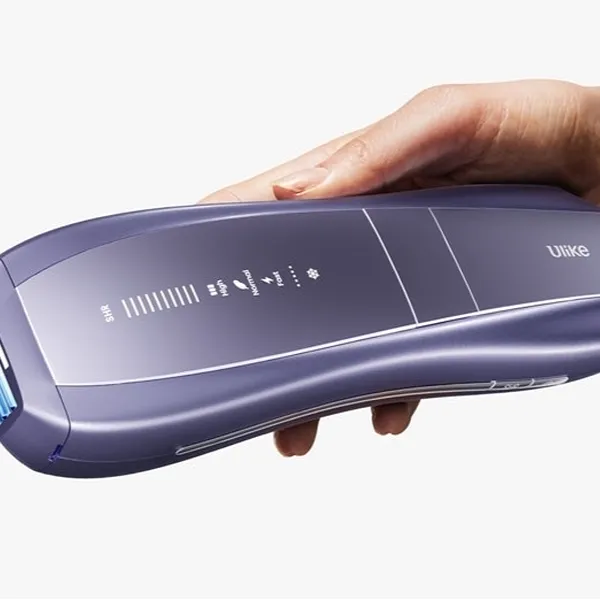
Skin sensing adds a helpful safety guardrail for beginners. Air 10's SkinSensor detects skin tone, automatically adjusts energy output in compatible modes, and can stop flashing when the detected skin tone is too dark for safe treatment.
- Check contact: the treatment window should sit flat against the skin.
- Avoid the eye area: facial approval does not mean the whole face is safe.
- Start conservatively: use a comfortable level before moving higher within the brand's guidance.
SHR mode for stubborn facial hair
SHR mode is most relevant for tougher areas such as the chin or jawline, where hair can be darker, thicker, and slower to respond. It should not be treated as a guarantee, especially if the growth is hormonal, but it gives you a more targeted option than using one basic setting everywhere.
Air 10's SkinSensor does not provide skin-color detection in SHR mode, so do not assume the device will automatically adjust energy or block treatment based on skin tone while using SHR. Follow Ulike's compatibility and treatment guidance carefully.
Easy treatment for small facial areas
Facial sessions should be simple enough to do even on a busy week. If you only need the upper lip and a few chin spots, a quick routine is more realistic than a long treatment process with lots of repositioning.
- Clean and dry the area completely.
- Shave the hair instead of waxing or plucking before treatment.
- Treat only approved facial zones.
- Skip the session if skin is sunburned, broken, or irritated.
Best professional lasers for facial hair removal
Professional laser treatment is usually the better path when facial hair is coarse, persistent, or difficult to match with a home device. It is also the safer choice if you have deeper skin, a history of pigmentation problems, or hair growth that seems linked to hormones. A clinic can adjust settings and choose a laser type in a way a home device cannot.
The main decision is not simply "laser is stronger." The better question is which laser is appropriate for your skin and hair. On the face, avoiding burns, discoloration, and unnecessary irritation matters just as much as reducing hair.
Alexandrite laser for lighter skin
Alexandrite laser is often used for lighter skin with dark hair because it targets pigment strongly. That contrast can make it effective, but it also means it is not the safest default for deeper skin tones.
If you have fair to light olive skin and dark facial hair, it may be worth asking about. If your skin tans easily or you have more pigment in the treatment area, the provider should explain why Alexandrite is appropriate or suggest a safer alternative.
Diode laser for dark coarse hair
Diode laser is commonly chosen for dark, coarse hair, especially on the chin and jawline. It can be a strong middle-ground option in clinics because many diode systems are versatile, though the exact device and provider skill still matter.
Nd:YAG laser for darker skin
Nd:YAG is usually the professional laser type to ask about first if you have darker skin. Its longer wavelength is generally considered safer for deeper skin tones because it is less focused on surface pigment than some other laser types.
This is especially important for facial treatment. A person with dark skin and coarse chin hair is not just shopping for strong results; they also need to reduce the risk of burns or discoloration. A consultation with a provider experienced in darker skin tones is worth it before committing to a package.
How to choose the best facial hair remover
The easiest way to choose is to rule out bad matches first. Do not start with price, social media reviews, or the strongest-looking claim. Start with skin tone, hair color, approved facial areas, and whether you are willing to keep up with the schedule.
Match it to your skin tone
Skin tone is the first safety check. IPL and laser devices use light energy, so the device must be able to treat the hair without putting too much heat into the surrounding skin.
For home devices, compare your skin with the brand's own compatibility chart before buying. For clinic treatment, ask which laser type they plan to use and why it suits your skin. If the answer is vague, that is a reason to be cautious.
Match it to your hair color
Dark brown and black facial hair usually respond best to IPL and laser because there is more pigment for the light to target. Blonde, red, gray, and white hairs are much harder to treat with these methods.
If most of your concern is pale peach fuzz, a laser-style device may not be the most practical answer. Dermaplaning, threading, waxing, or electrolysis may be more suitable depending on your goals and skin sensitivity.
Check approved facial areas
Facial approval has to be specific. A device that works well on legs or arms is not automatically suitable for the upper lip, chin, jawline, or cheeks.
- Upper lip: check eye-area warnings and treatment distance carefully.
- Chin: suitable for many devices, but coarse hair may need patience.
- Jawline: check whether the device allows use on that area.
- Near eyes or brows: avoid unless the product instructions clearly allow it, which many do not.
Look for cooling and skin sensing
Cooling and skin sensing are worth prioritizing for facial use because they solve two common problems: discomfort and uncertainty. If you are treating your face at home, feeling confident with placement and heat control makes a big difference.
For occasional upper-lip maintenance, these features make the routine easier. For long-term use on chin or jawline hair, they become even more important because you will likely need repeated sessions and later maintenance.
Conclusion
The best choice is the one that fits your face safely, not the one with the boldest claim. Ulike Air 10 is the easiest at-home IPL pick for many people who want comfortable facial maintenance, Tria 4X is the at-home option to consider if you want true laser technology, and professional lasers are still the smarter route for darker skin, coarse hormonal hair, or higher-risk cases.


