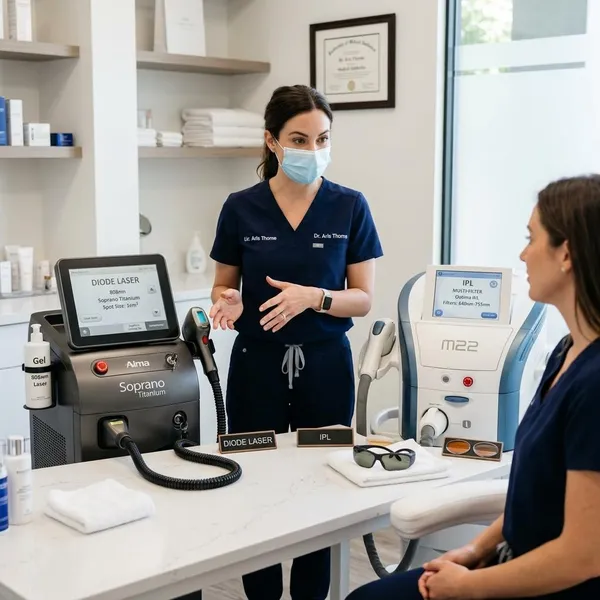
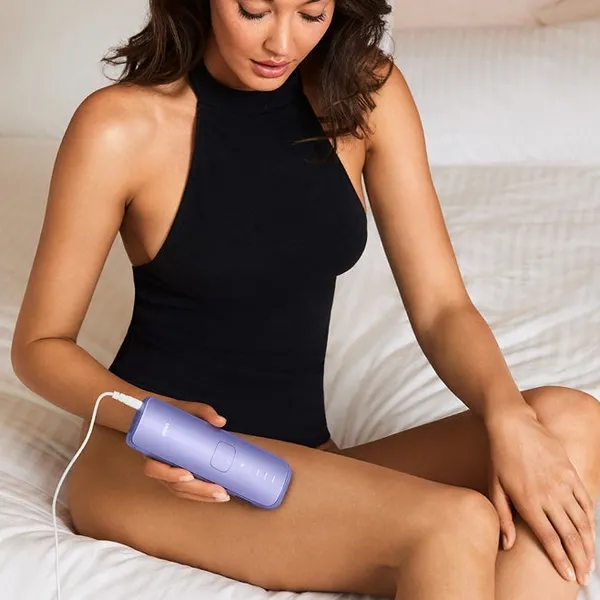
If you have dark skin, the safest at-home hair removal choice is usually the device that is most specific about skin tone support, not the one with the strongest power claim. For many medium-to-dark skin tones, that means a device with a skin tone sensor, adjustable intensity, and preferably longer-wavelength or diode-based technology. If your skin is very deep, easily marks after irritation, or you want to treat the face, professional laser with an experienced provider is often the safer route.
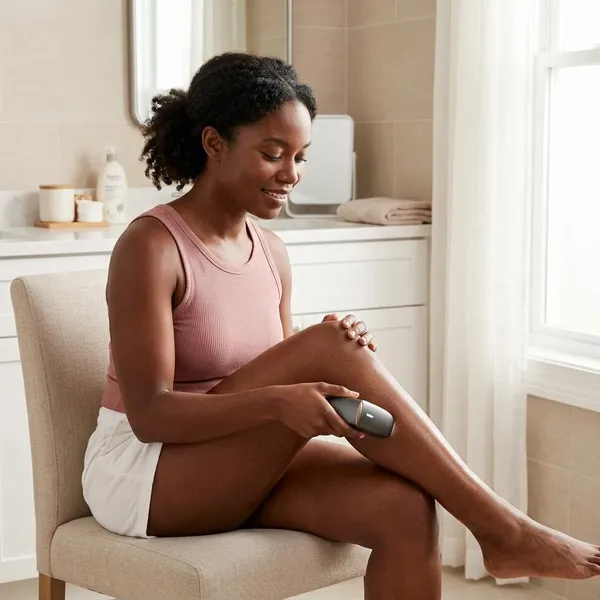
Best At Home Laser Hair Removal Devices for Dark Skin
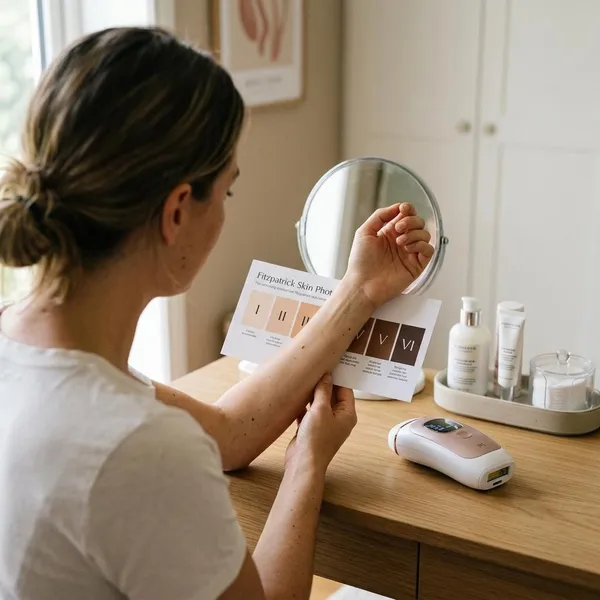
The first filter is simple: do not buy a home device unless the brand clearly says your skin tone is supported. Dark skin is not one category. A device that is reasonable for Fitzpatrick IV may be a poor choice for Fitzpatrick VI, even if the product page uses broad wording like "all skin tones."
Best overall option for darker skin tones
For many users with brown to dark brown skin and dark hair, the best overall type is an established device with automatic skin tone reading and adjustable output. The Braun Silk-expert Pro 5 is often discussed in this category because it uses IPL with a sensor that checks skin tone and adjusts intensity as you treat.
- Best fit: users around Fitzpatrick IV to V, if the brand chart supports their tone.
- Main advantage: less guesswork when moving between lighter and darker body areas.
- Main limit: not the most reassuring choice for the deepest skin tones.
Best diode laser option for deeper skin tones
If your skin is deeper or you are nervous about pigment changes, a diode-based home device is often worth considering before standard IPL. Devices such as DermRays V6S are marketed around more targeted light delivery, and some versions are positioned with longer-wavelength claims that may be more suitable for melanin-rich skin than broad-spectrum IPL.
Best IPL option with wider skin tone support
An IPL device can make sense if your skin tone sits within the brand's published range and the device has a reliable skin sensor or flash lockout. This is more suitable for someone treating legs or arms with dark coarse hair than for someone treating a darker bikini line, upper lip, or recently tanned skin.
Best choice for users prioritizing cooling and comfort
Cooling matters more than it sounds. A chilled tip, cooling window, or gentler comfort mode can make weekly sessions easier, especially on underarms, the bikini line, or the face. For dark skin, comfort is not only about pain; excess heat and repeated irritation can raise the chance of post-inflammatory hyperpigmentation.
Best professional-style home alternative
If you want something closer to clinic-style targeting, look at home diode-style options rather than basic IPL. Products marketed around 980nm-style diode technology may be more appealing for darker skin users who want a middle ground, but they still do not replace professional Nd:YAG 1064nm treatment. For Fitzpatrick VI skin, a history of keloids, melasma, or stubborn facial hair, an in-office consultation is the more cautious choice.
Laser vs IPL for Dark Skin
Laser and IPL both use light energy, but they behave differently on melanin-rich skin. IPL spreads a broader range of light, while laser uses a more focused wavelength. That difference matters because dark skin has more melanin in the surface layers, so the wrong device can heat the skin instead of the hair follicle.
Why IPL can carry higher pigment risks
IPL can be riskier on dark skin because broad-spectrum light is less selective. If too much energy is absorbed by the epidermis, the result can be redness, burns, blistering, or dark patches after inflammation. Newer IPL devices with sensors are better than older models, but they still need to be used only within the stated skin tone range.
- Avoid IPL if the brand does not show a clear skin tone chart.
- Be extra cautious on areas that are naturally darker, such as underarms and bikini line.
- Do not treat freshly tanned, irritated, sunburned, or self-tanned skin.
Why certain laser wavelengths are preferred for darker skin
Longer wavelengths are generally preferred because they tend to interact less with surface pigment and reach deeper toward the follicle. In clinics, Nd:YAG 1064nm is commonly used for darker skin tones when handled by trained professionals. True home Nd:YAG devices are not common, so some buyers look at diode-style home devices instead.
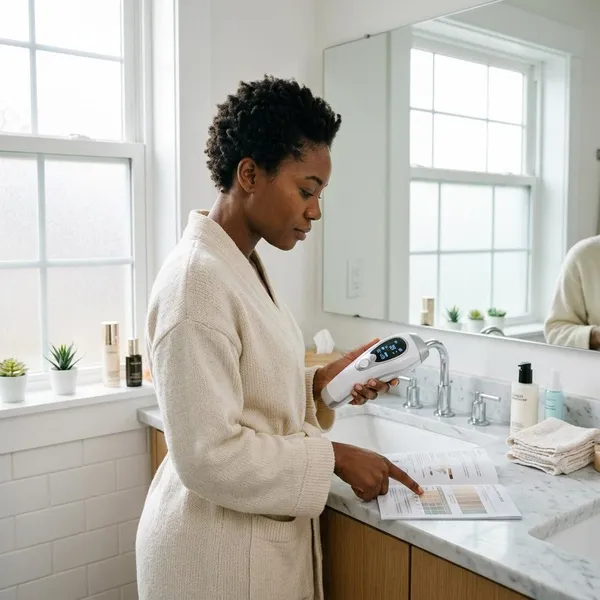
How to Choose a Hair Removal Device for Dark Skin
Start with safety compatibility, then compare comfort and convenience. The best device on paper is not helpful if it is too risky for your tone, too painful to use regularly, or too vague about where it can be used.
Check the supported skin tone range
The supported skin tone range is the most important buying detail. Look for a clear Fitzpatrick scale or a realistic skin tone chart, not just phrases like "safe for all." Many home devices stop at Type IV, some extend to Type V, and very few are truly appropriate for Type VI.
Look at wavelength and technology type
Technology type tells you how the device is likely to interact with pigment. Broad IPL is usually more demanding on dark skin, while longer-wavelength diode-style devices may be more suitable for deeper tones when the design and instructions support that use.
| Device type | Usually better for | Main caution |
|---|---|---|
| Sensor-based IPL | Medium to dark brown skin within the brand chart | Can still overheat pigment-rich areas |
| Diode-style home device | Darker tones needing more targeted energy | Must still have clear safety guidance |
| Professional Nd:YAG | Very deep skin tones or high-risk cases | Requires a qualified provider |
Prioritize skin sensors and cooling features
Skin sensors help prevent the most common home-use mistake: treating an area that is too dark for the selected setting. They are especially useful when your skin tone is uneven across body areas. Cooling is the second feature worth prioritizing because it can reduce heat buildup and make cautious, repeated sessions easier to tolerate.
Compare treatment areas and energy settings
Think about where you will actually use the device. Large treatment windows are convenient for legs and arms, but smaller attachments give better control around the upper lip, underarms, and bikini line. Multiple energy settings also matter because darker or more sensitive zones often need a lower setting than broader, less reactive areas.
For occasional summer prep on the legs, speed and ease may matter most. For year-round treatment of ingrown-prone underarms or bikini areas, cooling, low settings, and careful patch testing should carry more weight than flash speed.
What Results Can Dark Skin Users Expect?
With a suitable device, dark skin users can see slower regrowth, finer hair, and less dense coverage over time. The result is usually hair reduction, not total removal. The safest approach is gradual: lower settings, regular sessions, and stopping early if the skin reacts badly.
Typical timeline for visible hair reduction
Many users notice early changes after about 4 to 6 weeks, with clearer reduction after 8 to 12 weeks of consistent use. Progress may be slower on dark skin because safer settings are often more conservative. That is normal; turning the device up too quickly is not worth the risk of burns or dark marks.
Why results vary by hair and skin contrast
Light-based devices work best when the hair is dark and coarse enough to absorb energy clearly. Coarse black underarm hair may respond faster than fine facial hair, even on the same person. Gray, white, red, or very light hair usually responds poorly because there is not enough pigment in the hair for the device to target.
Permanent reduction versus complete removal
At-home devices are better understood as long-term reduction tools. Some follicles may stay quiet for a long time, while others come back finer or slower. Hormones, genetics, and body area all affect regrowth, so "permanent" should not be read as "never shave again."
When maintenance sessions are needed
Maintenance is usually needed once the first reduction phase is over. Some people touch up every few weeks; others can wait longer, especially on legs or arms. Facial and hormonally influenced areas often need more frequent upkeep.
- Before treatment: shave the area and make sure skin is clean, dry, and free of self-tanner.
- Before full use: patch test the exact area you plan to treat.
- During treatment: start low and avoid repeatedly flashing the same spot.
- After treatment: protect exposed skin from strong sun and watch for lingering irritation.
Conclusion
The safest choice is the device that clearly matches your skin tone, gives you control, and does not ask you to gamble with pigment risk. For many Type IV to V users, a sensor-based IPL or cautious diode-style device may be practical; for very deep skin, sensitive facial areas, or a history of hyperpigmentation, professional treatment is usually the smarter path. Choose slowly, patch test seriously, and treat steady reduction as the goal rather than chasing instant removal.